
REVIEW · CULTURAL VILLAGES & LONGHOUSE VISITS
Half-Day Mari Mari Cultural Village from Kota Kinabalu
Longhouses and fire in four hours. Mari Mari Cultural Village is an open-air stop in the countryside where you meet multiple Sabah ethnic communities in one guided visit. I especially like the hands-on demonstrations like blowpipe making and fire starting, because they explain how skills connect to daily life and belief systems, not just show off tricks.
The other thing I like a lot is the hotel pickup and drop-off, which keeps this easy on your time and energy. One thing to consider: with a half-day format and short visits at each area, you have to be okay with moving at a steady pace to see everything.
In This Review
- Key takeaways before you go
- Longhouses and fire in four hours, Mari Mari basics
- Where it fits in your trip
- Which Sabah cultures you will meet, Dusun to Murut
- A half-day rhythm outside Kota Kinabalu, transport and timing
- Session timing, including cruise schedules
- Group size and how it affects your experience
- Longhouse look and learn stops, what each 20 minutes teaches
- Mari Mari Cultural Village museum stop
- Dusun paddy farming stop
- Rungus longhouse stop
- Lundayeh stop and food practices
- Bajau stop: seafaring roots
- Murut stop: hill life and hunting skills
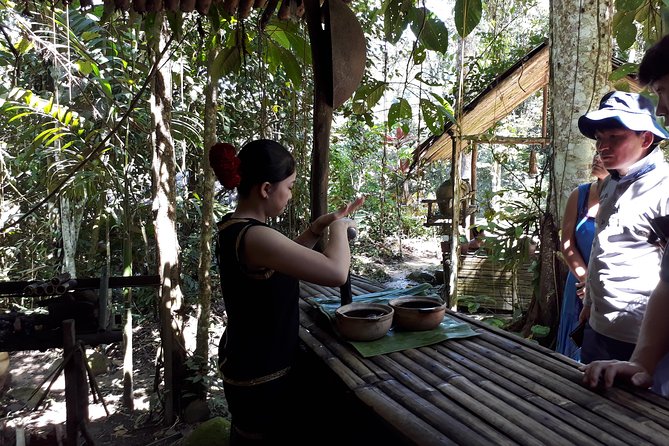
- Demos you should watch closely, blowpipe, fire starting, tattooing
- Quick tip for getting the most from demos
- Food and performance, what you are really paying for
- Cultural dance performance
- What I’d watch for at the buffet
- Price check for $90, value vs DIY
- The human touch
- Who this tour fits, and who might prefer something else
- Should you book this half-day cultural village tour?
- FAQ
- How long is the Mari Mari Cultural Village half-day tour?
- Where does the tour start?
- How much does it cost?
- Is lunch included?
- Do you get cultural performances?
- What cultural groups are covered?
- What demonstrations are included?
- Is pickup included from Kota Kinabalu hotels?
- How many people are in a group?
- What are the session start times for cruise passengers?
Key takeaways before you go
- Five Sabah cultures in one visit, including Dusun, Rungus, Lundayeh, Bajau, and Murut
- Demonstrations with meaning, from blowpipe craft to fire starting, plus tattooing symbolism
- Village life you can observe, especially the longhouse layout and daily routines
- Lunch or hi tea built into the schedule, depending on your session time
- Small-group feel (max 15), plus a live cultural dance performance
- Easy logistics from Kota Kinabalu, using pickup service and a mobile ticket
Sabah side, a few more we rated
- Guided Snorkeling Day Trip, Kota Kinabalu, Sabah, Malaysia★ 5.0 · 282 reviews
- Borneo (Klias) River Cruise & Fireflies Tour★ 4.5 · 126 reviews
- Kota Kinabalu: Snorkeling & Island Hopping Sapi & Manukan★ 3.9 · 97 reviews
- Leisure Diving | Fun Dives | 3 Dives in TARP, Kota Kinabalu★ 5.0 · 94 reviews
Longhouses and fire in four hours, Mari Mari basics
Mari Mari Cultural Village is designed like a living, open-air museum. Instead of reading panels all morning, you walk through longhouse areas and watch guided explanations of how different communities in Sabah traditionally lived, farmed, fished, or hunted. The big idea is simple: culture is practical. It shows up in tools, homes, food, and ceremonies.
The tour usually takes about 4 hours, and it runs on two daily sessions. If you’re trying to fit it between other Kota Kinabalu plans, that shorter time window is a plus. You get a taste of the region’s diversity without needing to commit to a full-day excursion.
Where it fits in your trip
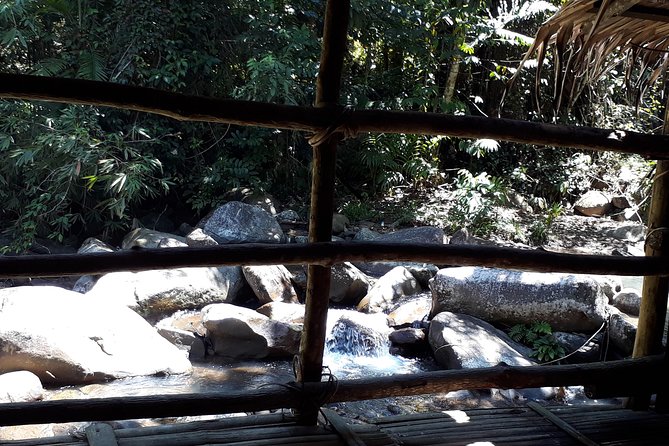
If you are visiting Kota Kinabalu for a few days and want a day that does not hinge on weather or sea conditions, this is a strong pick. You will be in the countryside, so it feels like you’re away from the city, but you still return quickly. It is also ideal if you like structured tours that help you know what you’re looking at.
Which Sabah cultures you will meet, Dusun to Murut
Mari Mari’s value is that it covers multiple groups in one loop. The experience focuses on Dusun, Rungus, Lundayeh, Bajau, and Murut traditions. Each community is represented with its own context, so you start seeing patterns in how people adapt to their environment.
Here’s the gist of what you will learn, in plain terms:
- Dusun: traditionally rice growers, with differences between wet and dry paddy depending on where people live.
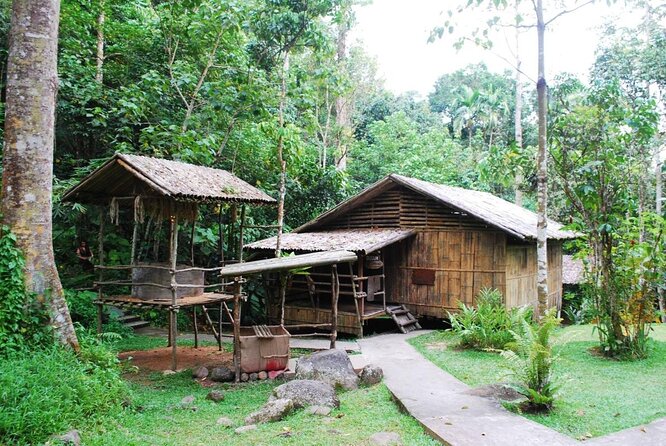
- Rungus: known for longhouses built with wood, bamboo, and palm-leaf thatch, and raised for practical reasons like avoiding flooding and wildlife.
- Lun Bawang: agriculturalists who also raise animals, and who have been known historically as hunters and fishermen, with food preservation using salt and brining or pickling.
- Bajau: often called sea gypsies by outsiders, originally seafaring communities, now with groups such as East Coast and West Coast Bajau.
- Murut: among the last Sabah groups to renounce headhunting, traditionally shifting cultivators in hill areas, and also supplementing food with blowpipe hunting and fishing.
That list might sound like a textbook. In practice, the tour guide connects the dots as you move through the village areas, so it feels like a set of mini-lessons rather than five separate lectures.
A half-day rhythm outside Kota Kinabalu, transport and timing
Let’s talk logistics, because this is the part that can make or break a half-day tour.
You get hotel pickup and drop-off from Kota Kinabalu, and the ride is by air-conditioned vehicle. The operator notes two vehicle setups depending on group size: an air-conditioned minivan for 6 pax and above, and an Innova for 5 pax and below. Either way, it is built for comfort, not local bus chaos.
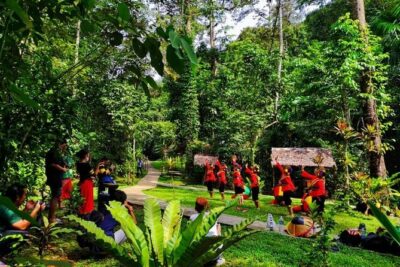
The tour also includes a live Borneo Cultural Dance Performance, which matters because it adds an event-like anchor to the visit. You are not just walking and listening.
More village visits, Sabah and Sarawak
Session timing, including cruise schedules
There are two main sessions. The tour includes meals tied to your session:
- Morning session includes a buffet lunch for the 9 am session.
- Afternoon session includes hi tea for the 1 pm session.
If you are coming from a cruise, the tour notes that the morning starts at 10.00am and the afternoon starts at 2.00pm. That detail matters because you do not want to mix up the meal time or plan your schedule around the wrong start.
Group size and how it affects your experience
This activity has a maximum of 15 travelers. That usually helps with questions and attention from the driver/guide. It is not huge, and it is not a private estate tour either. Think of it as a small-group introduction that works best if you like guided structure.
Longhouse look and learn stops, what each 20 minutes teaches
The tour moves through the village in a sequence of short stops, with about 20 minutes allocated to each area. That means you get a snapshot of each culture rather than a deep, slow study of one community.
Here is what each stop effectively gives you, and what you should watch for.
Mari Mari Cultural Village museum stop
You start at Mari Mari Cultural Village itself, which functions like an open-air museum focused on preserving Borneo’s ethnic cultures. This is the moment where you get your “what am I looking at?” context. Expect an intro to the village concept and how the different areas are organized.
This is also where your admission ticket is included in the flow of the tour.
Dusun paddy farming stop
The Dusun section focuses on rice cultivation. The key idea is how wet and dry paddy farming differ by location, especially between coastal plains/valleys and hill or inland areas. When you hear this, it becomes easier to understand why homes, food, and daily routines vary so much from place to place.
Rungus longhouse stop
At the Rungus area, you’re looking at the longhouse form and the reason behind it. The longhouse is described as being made from wood, bamboo, and atap (palm leaves). You also learn about why it is raised, including avoiding flood and wildlife like snakes.
My practical advice: when you’re standing in front of the structure, look at the materials and layout. The raised design is not just architecture, it’s an environmental solution.
Lundayeh stop and food practices
This segment talks about agriculture and the animals people traditionally reared, such as poultry, pigs, and buffalo. It also covers hunting and fishing and, importantly, food preservation. You hear about meat and fish being brined or pickled with salt and stored in hallo… (the tour description cuts off there, but the idea is clear: preservation mattered).
If you like food culture, this is one of the more “useful” stops because it connects technique to survival and planning.
Bajau stop: seafaring roots
For Bajau, the focus is on seafaring origins and how the group is now described in two broad branches, including East Coast and West Coast Bajau. Even if you do not know the terms yet, the guide usually helps you understand what changed over time and why.
This is a good moment to ask yourself: what does coastal life demand from people, day after day?
Murut stop: hill life and hunting skills
The Murut section brings in history around headhunting, then shifts to traditional shifting cultivation in hill areas with tapioca and hill paddy. It also connects hunting and fishing with blowpipe hunting.
This stop sets you up nicely for the later skill demonstrations, because by the time you reach blowpipes and fire starting, you can see them as parts of a bigger system.
Demos you should watch closely, blowpipe, fire starting, tattooing
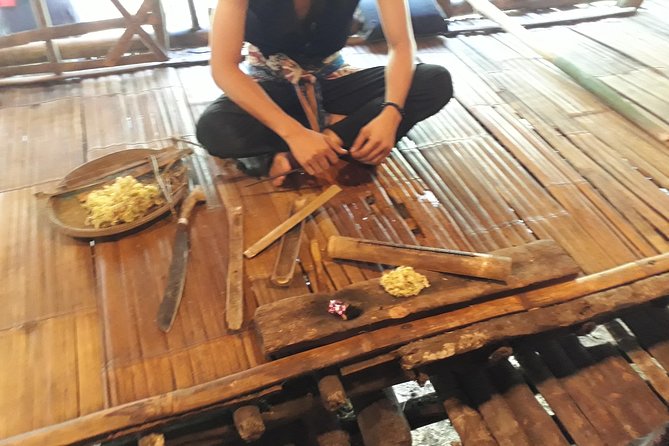
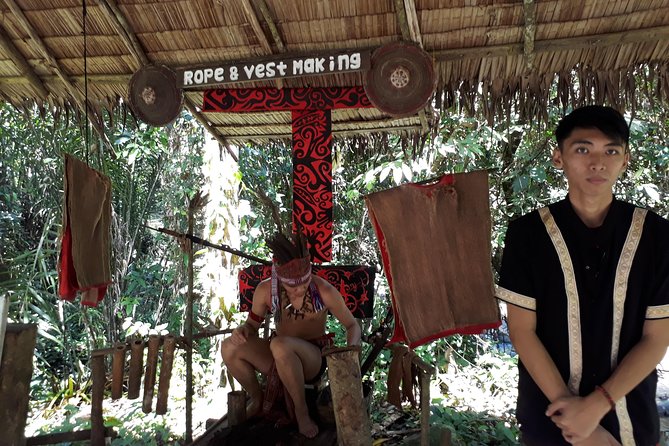
The cultural demonstrations are a core reason to book this tour, not just to see houses. The plan includes blowpipe making, fire starting, and tattooing demonstrations, with the guide explaining the symbolism behind them.
Here’s what makes these demos more than a show:
- Blowpipe making ties a tool to hunting practices and skill.
- Fire starting connects to survival needs and ritual meaning.
- Tattooing gives you a window into symbolism, not just body art.
Even if you are not a “craft person,” you’ll get more out of it if you watch for the logic: how materials, technique, and purpose connect. The guide’s job here is to help you see beyond the novelty.
Quick tip for getting the most from demos
Stay close enough to see what the demonstrator is doing, but not so close that you block other people’s view. If you want photos, plan for short bursts. The goal is to listen while you look.
Food and performance, what you are really paying for
This tour includes a meal, which is a big part of the value calculation for a half-day experience. Depending on your session:
- Buffet lunch is included for the 9 am session.
- Hi tea is included for the 1 pm session.
The tour description also points to the smell and experience of bamboo cooking before your meal. Food smells are powerful, and they also give you a sensory memory you can take home, even when the rest of the visit is a blur.
Cultural dance performance
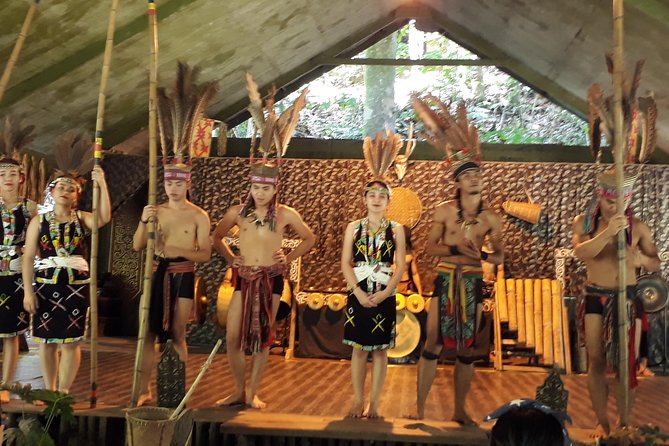
You also get a live cultural dance performance. This matters because it breaks up the walking and gives you something to watch that is easier to digest than long explanations. It also helps you feel the energy of the village rather than treating it like a static exhibit.
What I’d watch for at the buffet
Because the meal type changes by session, I suggest you arrive ready to eat rather than waiting for the perfect dish. If you have dietary restrictions, you should treat this as a “check first” situation, since the only confirmed info is that a buffet lunch or hi tea is included, not the exact menu details.
Price check for $90, value vs DIY
At $90.00 per person, this is not a budget city tour. But it does include a lot of the things that usually cost extra when you piece it together: hotel pickup and drop-off, a guide/driver, admission for the main village stop, transport in an air-conditioned vehicle, and a meal plus cultural performance.
Also, the tour is designed for the half-day time slot. Trying to recreate it on your own can mean two problems:
- You might spend more time figuring out logistics.
- You might miss the “what does this mean?” layer that a guide provides, especially around symbolism for practices like tattooing or the cultural reasons for longhouse design choices.
One more note: it’s often booked about 18 days in advance on average. That suggests you’ll want to lock in your session rather than waiting until the last minute, especially if you have only a couple of days in Kota Kinabalu.
The human touch
In past feedback from the tour operator, the team specifically thanked people by name, including a guide called Sam and a driver called Joe. I can’t guarantee who you’ll get, but it’s a good sign that the experience is run by identifiable staff who care whether the day goes smoothly.
Who this tour fits, and who might prefer something else
This tour fits best if you want a structured cultural introduction and you’re short on time.
You should consider it if:
- you want to cover multiple Sabah cultures without hopping between locations all day
- you enjoy guided explanations, especially where tools and traditions have meaning
- you like short, varied segments and a clear schedule
- you value pickup and a meal included
You might want to skip or complement it with something else if:
- you hate moving at a steady pace
- you want ultra-deep study of one community instead of a broad overview
- you are very photo-focused and will get frustrated when demos and crowds limit your time for long shots
Should you book this half-day cultural village tour?
I’d book it if you want a single, well-timed day that gives you real context for Sabah’s ethnic diversity, plus demonstrations you can’t easily replicate on your own. The strongest selling points are the guided culture content and the fact that you get both a meal and a performance without adding extra planning.
If you are the type who enjoys asking questions, you’ll get more from the short stops because the guide can point out what matters. If you’re the type who prefers slow, self-guided wandering, you might feel the schedule is tight, so build in room for flexibility or pair it with a separate evening plan back in Kota Kinabalu.
Bottom line: for a half-day format, Mari Mari is a practical, structured way to understand Sabah cultures in a way you can remember, not just scroll past.
FAQ
How long is the Mari Mari Cultural Village half-day tour?
It runs for about 4 hours.
Where does the tour start?
The experience includes hotel pickup and drop-off from Kota Kinabalu.
How much does it cost?
The price is $90.00 per person.
Is lunch included?
Yes. The morning 9 am session includes a buffet lunch, and the afternoon 1 pm session includes hi tea.
Do you get cultural performances?
Yes, the tour includes a live Borneo Cultural Dance Performance.
What cultural groups are covered?
The visit introduces the Dusun, Rungus, Lundayeh, Bajau, and Murut cultures.
What demonstrations are included?
You can see blowpipe making and fire starting demonstrations, and there is also tattooing discussed as part of the cultural practices.
Is pickup included from Kota Kinabalu hotels?
Yes, hotel pickup and drop-off are included.
How many people are in a group?
The maximum number of travelers is 15.
What are the session start times for cruise passengers?
Morning session starts at 10.00am, and afternoon session starts at 2.00pm.
More Tour Reviews in Kota Kinabalu
More Village Visits
Sabah, More From Us
Other Kota Kinabalu write-ups from our reviewers
- Sabah: White Water Rafting Grade 3-4 at Padas River
★ 4.7 · 3 reviews - Kinabalu Park Day Trip
★ 3.5 · 3 reviews - Kota Kinabalu : Mari-Mari Cultural Village Day Tour
★ 4.7 · 3 reviews - Kota Kinabalu | Snorkeling Sapi Island/Manukan Island
★ 3.1 · 3 reviews - Full Day JomTour! Memorable Experience in Kota Kinabalu, Sabah
★ 3.0 · 4 reviews
More Cultural Villages & Longhouse Visits.
 ★ 4.5Mari-Mari Cultural Village Tour Including LunchFrom $5845 reviews
 ★ 5.0Mari Mari Village & Bongawan Cruise PackageFrom $12132 reviews
 ★ 5.0Private Tour Kampung Gipsi Sabah Cultural Village Kota KinabaluFrom $2532 reviews
 ★ 4.7KAMPUNG GIPSI-DAY TRIP TO BAJAU HEAVEN FREE NASIGORENG & TEHFrom $7617 reviews
 ★ 4.5Mari-Mari Cultural Village Visit + Lunch + transferFrom $8516 reviews
 ★ 5.0Sarawak Cultural Village Tour from KuchingFrom $11213 reviews
★ 5.0Sarawak Cultural Village Tour from KuchingFrom $8612 reviews
 ★ 4.5Mari Mari Cultural VillageFrom $10011 reviews
Other Malaysia lists with this tour