
REVIEW · CULTURAL VILLAGES & LONGHOUSE VISITS
Sarawak Cultural Village Tour from Kuching
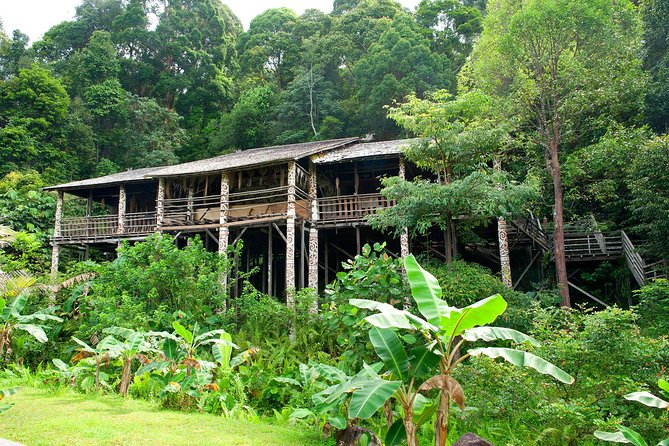
Culture in a village, not a classroom. This is one of those Kuching tours where the main event is the real place itself: Sarawak Cultural Village, with seven ethnic houses to walk through while an English-speaking guide explains what you’re seeing. You also get hands-on moments, from traditional making demos to trying skills like a Penan blowpipe and learning about the Orang Ulu sape.
One practical heads-up: food and drinks are not included, so build the tour into your day with a meal before or after, and plan for water.
In This Review
- Key things to know before you go
- Getting Oriented in Kuching, Then Stepping Into Sarawak’s Village World
- Seven Ethnic Houses: What You See and What It Teaches You
- Hands-On Crafts and Everyday Village Life
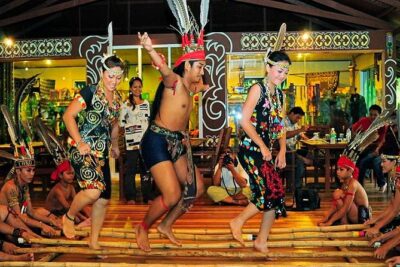
- The Multi-Ethnic Performance in the Air-Conditioned Theatre
- Penan Blowpipe and Orang Ulu Sape: Trying It, Not Just Watching
- Price, Time, and Value for a 4-Hour Cultural Fix
- What to Bring and How to Get the Most From It
- Should You Book This Sarawak Cultural Village Tour From Kuching?
Key things to know before you go
- Hotel pickup and drop-off in selected Kuching hotels makes it easy if you do not want to plan transport.
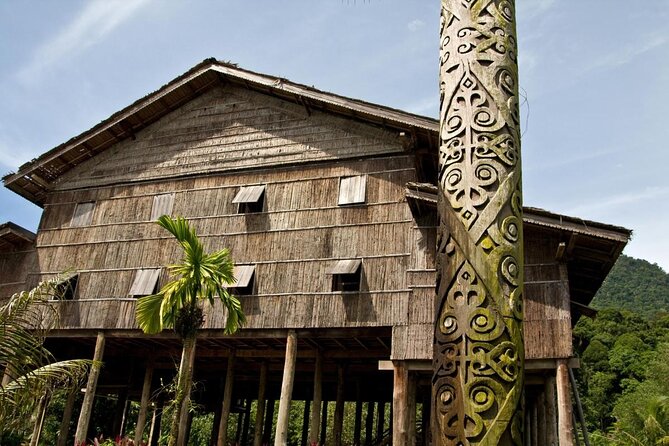
- Seven ethnic houses give you a fast, structured way to compare communities in one living museum.
- A multi-ethnic performance in an air-conditioned theatre is built in, so you get cultural value even if the weather turns.
- Craft demonstrations cover bamboo and wood carving, straw weaving, and beadwork, with time to look closely.
- Small group size (up to 9 people) helps your guide keep the pace human and questions possible.
- Hands-on try-outs may include Penan blowpipe practice and the Orang Ulu sape.
Sarawak, a few more starting in Kuching
- Half-Day Heritage Bike Tour in Kuching★ 5.0 · 162 reviews
- Night Froggy Adventure at Kubah National Park★ 5.0 · 71 reviews
- Semenggoh Orangutan Centre from Kuching★ 4.5 · 53 reviews
- Bako National Park from Kuching City★ 4.5 · 35 reviews
Getting Oriented in Kuching, Then Stepping Into Sarawak’s Village World
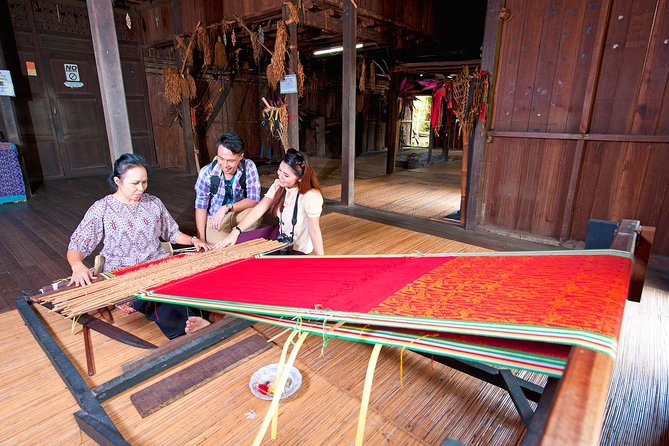
Kuching is a good base for Sarawak, but sometimes you want culture without spending half a day on planning. This tour gives you a simple shape: pickup, a short ride, then a focused 3-hour visit at the village, followed by return transport. The whole thing runs about 4 hours, which fits nicely between other Kuching sights.
I especially like that it is set up as a living museum rather than a quick photo stop. You are not just looking at exhibits behind glass. You’re walking through homes, seeing tools and daily routines, and listening to explanations in English so the details actually land.
Another thing I like is the small-group format. With a maximum of 9 people, the guide can slow down when you’re curious, and you are less likely to feel like you’re sprinting with a crowd. On recent tours, guides such as Richard, Vincent, and Mastry were specifically praised for being friendly, informative, and careful with the group.
One more bonus for practical planning: you get a mobile ticket, plus group discounts are available. If you like a clean check-in, this kind of setup tends to keep the day smooth.
Seven Ethnic Houses: What You See and What It Teaches You
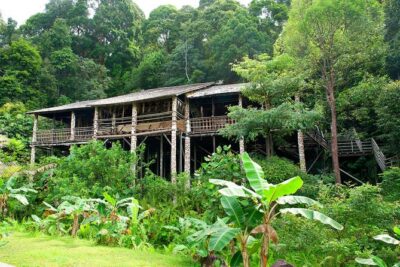
The heart of the experience is walking through seven ethnic houses. Even if you only know a few names of Sarawak’s groups, this layout helps you get your bearings fast. Each house is a different window into how people live, what tools matter, and how culture shows up in everyday life.
In plain terms, you’ll spend a good chunk of your time simply moving from one house to the next. That means you can take breaks when you want, ask questions when the guide is nearby, and notice how materials and design reflect local needs. It is not one long lecture. It feels like a guided walk through a community.
Here’s what makes this kind of “multiple homes in one place” valuable for you: it compares culture in a controlled way. You can see differences side by side, instead of trying to piece things together later from memory and scattered photos. And because it is a living village, the explanations connect to real activity rather than static displays.
You should also know the visit includes a cultural performance segment at the amphitheatre. That matters because it gives context to the houses. In other words, you learn what you’re seeing, then you see a cultural expression that goes with it.
Possible drawback to consider: you are working with a fixed time window. It is a 3-hour on-site visit, so you will not get a slow, museum-style pace where you linger for hours in every corner. If you are the type who loves to read every sign and study every tool, you may want to come prepared to prioritize what matters most to you.
Hands-On Crafts and Everyday Village Life
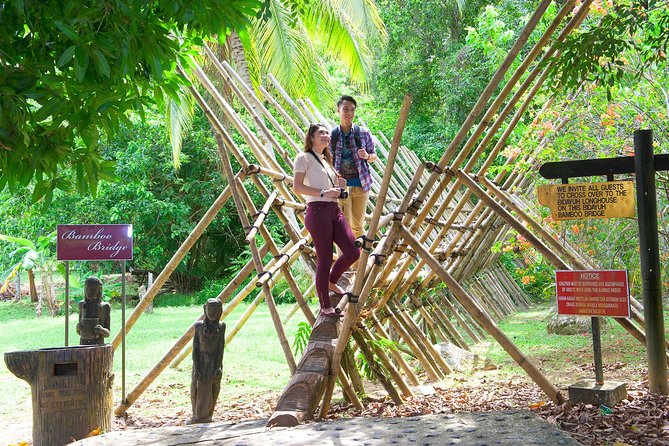
One of the most practical reasons this tour gets high marks is that it feels interactive in real ways, not staged only for photos. As you tour the village, you’ll watch villagers go about everyday activities, and you’ll see demonstrations of traditional making.
The listed craft demonstrations include:
- wood and bamboo carvings
- straw weaving
- beadwork
These are not just random souvenirs. They show how everyday objects are built and decorated, and that helps you understand culture as something made by hand over time. If you like crafts, I think you’ll find this section better than a generic show, because you can watch the process and ask what tools are doing.
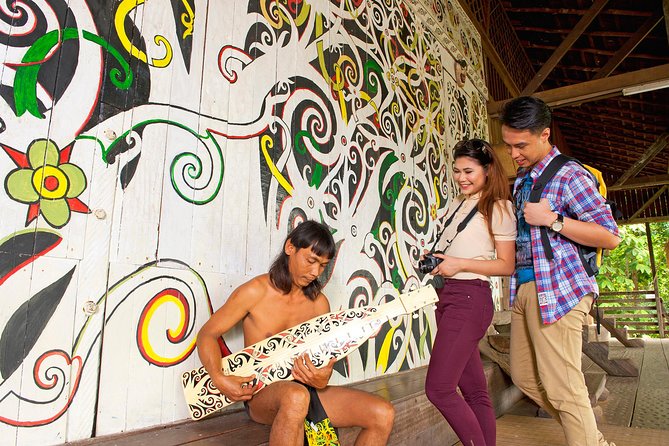
Some tours also include a chance to get involved with practical activities. The tour description notes try-outs such as shooting a Penan blowpipe and playing the Orang Ulu sape. Even when you only get a taste, it changes your understanding. You go from seeing an instrument or skill to appreciating why it takes practice.
I also like that the guide is there to translate what you’re looking at into clear, understandable context. In the praised guides from past groups, the recurring theme was explanations that made each community feel real. That is the difference between watching something and actually learning from it.
What to watch for: since this is a village environment, expect some outdoor time between houses and activity areas. If you get caught in rain, you might feel it. One person noted the experience had some rain, not a total washout, but enough that a small umbrella could have helped. Bring a compact umbrella if you’re visiting in wetter months, and keep your day flexible if skies change.
The Multi-Ethnic Performance in the Air-Conditioned Theatre
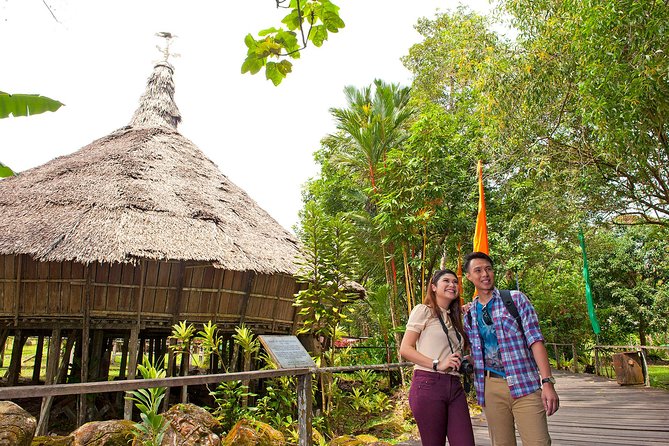
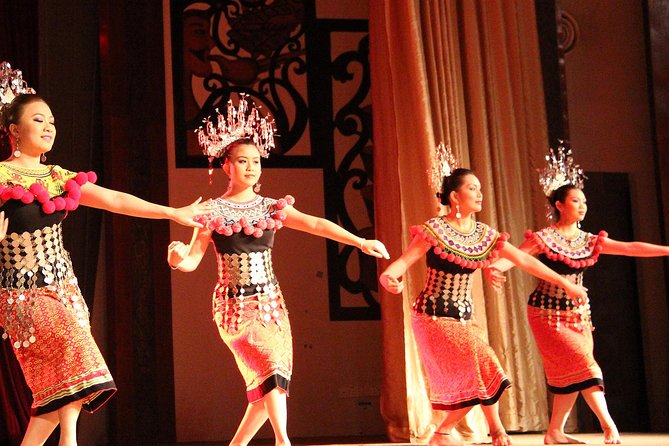
After you’ve spent time walking the houses, the tour folds in a performance that brings the whole day together. There is cultural dancing and a show component, and it takes place in an air-conditioned theatre. That is a big quality-of-life detail, especially in Kuching’s heat and humidity.
This segment is where you can expect costumes, music, and storytelling through movement. Even if you do not catch every detail, you’ll still feel the structure: a performance that acts like a summary of cultural expression for the day you just spent learning.
One honest note from past visitors is that the show can feel a bit like a theme-park style production for some people, but also amusing. That does not have to be a deal-breaker. Think of it like a guided highlight reel. You’re not sacrificing education for entertainment, you’re getting a packaged way to remember what you saw earlier.
Because the performance is in an air-conditioned space, it also works well if your priorities are comfort. You can recover from walking, sit down, and let your guide narrate the connections between what you learned and what you’re watching.
If you have limited time in Kuching, this is one of the best “value boosters” on the schedule. A guided village walk is great, but the show gives you an immediate payoff you can feel without needing extra reading or research later.
More village visits, Sabah and Sarawak
Penan Blowpipe and Orang Ulu Sape: Trying It, Not Just Watching
There is a special kind of learning that happens when you do something physical, even briefly. The tour description calls out activities you might be able to try, including shooting a Penan blowpipe and playing the Orang Ulu sape.
You should treat these as short try-outs, not a full lesson or a performance guarantee. The value is in the experience of trying, not in mastering a skill in one afternoon. That said, these are the kinds of activities that make a cultural visit feel personal.
Why you might love this part: it turns cultural knowledge into muscle memory. You understand why tools are shaped a certain way, why preparation matters, and how sound or motion fits with a community’s traditions. Even if your first attempt is not perfect, you’ll come away with a clearer picture than you’d get from photos alone.
Also, because this is included in a 4-hour tour, you do not have to add a separate workshop. That keeps the day efficient, and you stay on schedule.
If you’re worried about comfort or awkwardness, the good news is you are in a small group, and you’re with an English-speaking guide. That combination typically makes practical activities less intimidating, and more like a controlled, supportive demo.
Price, Time, and Value for a 4-Hour Cultural Fix
The price is $86 per person for a tour that runs about 4 hours. On paper, that can sound pricey if you’re comparing it to a self-guided museum ticket. But you’re not only paying for entry.
You’re paying for:
- hotel pickup and drop-off in selected Kuching hotels
- an English-speaking guide
- entrance fee included
- the show component
- craft demonstrations and village explanations
- a small group experience (maximum of 9 people)
That is why I think it can be good value if you want one organized cultural block without the hassle of transport. Kuching heat plus navigation can add time and energy, so having pickup built in often feels worth it.
The main reason to watch your budget is the missing meal. Since food and drinks are not included, you’ll need to handle lunch or snacks separately. If you eat out afterward, plan that cost too. In exchange, you’re getting a longer cultural visit with included content, not just a brief walking tour and a quick theatre stop.
Timing also helps value. You’re booked around 4 hours total, and the tour is best as a half-day anchor. If you’re trying to fit Sarawak Cultural Village into a busy Kuching itinerary, this structure prevents your day from turning into a log-jam of separate ticket lines and separate transport arrangements.
What to Bring and How to Get the Most From It
This is the kind of tour where small comfort choices make a difference. You’ll be walking between houses and watching demonstrations, so think about staying comfortable more than looking stylish.
I suggest:
- Wear breathable shoes you’re okay getting a little dusty or damp if rain happens
- Bring a light rain layer or compact umbrella, just in case you hit passing showers
- Pack water, since drinks are not included
- Bring a small amount of cash for snacks or any on-site purchases you might want to make
- If you like photos, charge your phone and keep an eye on where you’re allowed to stop and shoot
Also, go in with a simple mindset: ask one or two questions you actually care about. The guide’s strength is English explanations and connecting what you see to how people live. If you treat it like a conversation, the experience gets better.
If you’re traveling with family or friends, the small group size helps. It is easier for different ages to stay engaged because the pace feels manageable. For solo visitors, the guide can make the information feel less abstract, and the village structure helps you track what you’re learning.
Should You Book This Sarawak Cultural Village Tour From Kuching?
I’d book this if you want a structured, half-day way to understand Sarawak’s cultural diversity without piecing together lots of separate stops. The combination of seven ethnic houses, live demonstrations, and a theatre show gives you both learning and a clear ending to the day.
It is also a smart choice if you dislike transit planning. Hotel pickup and drop-off in selected Kuching hotels makes it practical, and the tour runs about 4 hours, which is easy to slot into a schedule.
Do not book it if food is a deal-breaker for your budget or comfort. Since food and drinks are not included, you’ll need to think about meals. Also, if you are chasing a slow, deep academic experience with lots of reading time, you might find the fixed 3-hour on-site visit a little fast.
If you’re in Kuching with limited time and you want your cultural experience to feel real, hands-on, and guided, this is one of the cleaner bets in the city.
More Tour Reviews in Kuching
More Village Visits
Sarawak, Further Afield
Other Kuching write-ups from our reviewers
- Kuching: Walking Tour with Sampan Boat Ride and Lunch
★ 5.0 · 3 reviews - Kuching Half Day City Tour
★ 5.0 · 4 reviews - Sarawak Sunset River Cruise with Return Transfer
★ 4.0 · 5 reviews - Traditional Bidayuh Village Bamboo Longhouse Tour
★ 3.5 · 6 reviews - Sarawak Cultural Village Tour
★ 4.5 · 6 reviews
More Cultural Villages & Longhouse Visits.
 ★ 4.5Mari-Mari Cultural Village Tour Including LunchFrom $5845 reviews
 ★ 5.0Mari Mari Village & Bongawan Cruise PackageFrom $12132 reviews
 ★ 5.0Private Tour Kampung Gipsi Sabah Cultural Village Kota KinabaluFrom $2532 reviews
 ★ 4.7KAMPUNG GIPSI-DAY TRIP TO BAJAU HEAVEN FREE NASIGORENG & TEHFrom $7617 reviews
 ★ 4.5Mari-Mari Cultural Village Visit + Lunch + transferFrom $8516 reviews
 ★ 5.0Sarawak Cultural Village Tour from KuchingFrom $11213 reviews
 ★ 4.5Mari Mari Cultural VillageFrom $10011 reviews
 ★ 4.5Semenggoh Orangutan Center & Sarawak Cultural VillageFrom $15810 reviews
Other Malaysia lists with this tour