
REVIEW · SEMPORNA & BORNEO DIVING TRIPS
RAID Try-Dive in Kota Kinabalu, Sabah
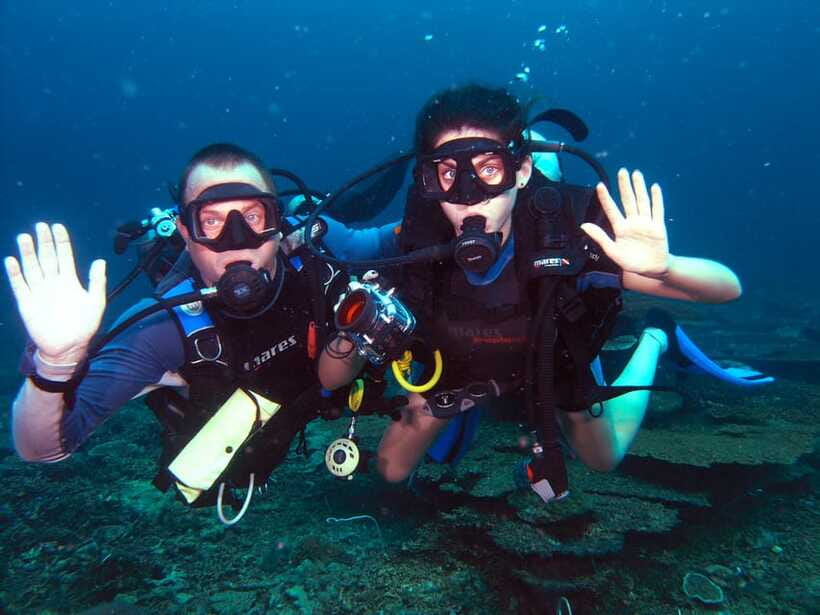
First time water time in Sabah feels like a switch flips in your brain. You get two calm, beginner-friendly reef swims (to about 12 meters) with a small group instructor, plus a boat day and an island lunch in the Tunku Abdul Rahman Marine National Park. I especially like how the format keeps things safe and doable, and how the marine life can be genuinely surprising, even for non-divers. The main catch is that it is not a fit if you have respiratory issues, and you also need to self-certify you are healthy enough for scuba.
This is set up for people who want the real underwater world without committing to a long training track. I like that it includes both the classroom basics and the practical skills right before your first reef swim, so you are not guessing. One possible drawback to plan around, especially if you travel soon after, is the rule that you need at least 18 hours free after your scuba water time before flying.
In This Review
- The value of a RAID try-scuba day in Kota Kinabalu’s Marine Park
- Price and the real cost: $112 plus the permit math
- Meeting at DBKK Jetty: how the day actually flows
- The morning prep: forms, safety talk, and getting comfortable
- First reef swim: sheltered bays, calm water, and coral close-ups
- What you might see: clownfish, coral variety, and turtle luck
- Island lunch in the Tunku Abdul Rahman Park: Pulau Mamutik or Pulau Sapi
- Second reef swim: a max around 12 meters, then back to the city
- Small group setup and the instructor factor
- Gear, comfort, and what you need to know about health rules
- Who this is best for in Sabah
- Should you book the RAID try-scuba day in Kota Kinabalu?
- FAQ
- How long is the RAID try-scuba experience?
- Where does the tour start?
- How many underwater sessions do I do?
- What is the maximum depth?
- Is scuba gear included?
- What is included for food and snacks?
- What is not included in the price?
- Do I need a permit?
- Who can take part and what are the minimum requirements?
- Is it safe to fly right after the experience?
The value of a RAID try-scuba day in Kota Kinabalu’s Marine Park
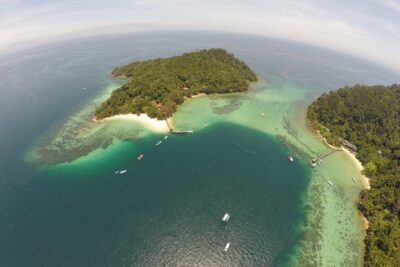
If Kota Kinabalu is your base in Sabah, this is one of the cleanest ways to try scuba without making your itinerary overly complicated. The area you visit, the Tunku Abdul Rahman Marine National Park, sits right off the city and is made for protected, calmer water. You spend your day out on the sea, then come back with a solid “I can do this” feeling rather than a shrug and a souvenir photo.
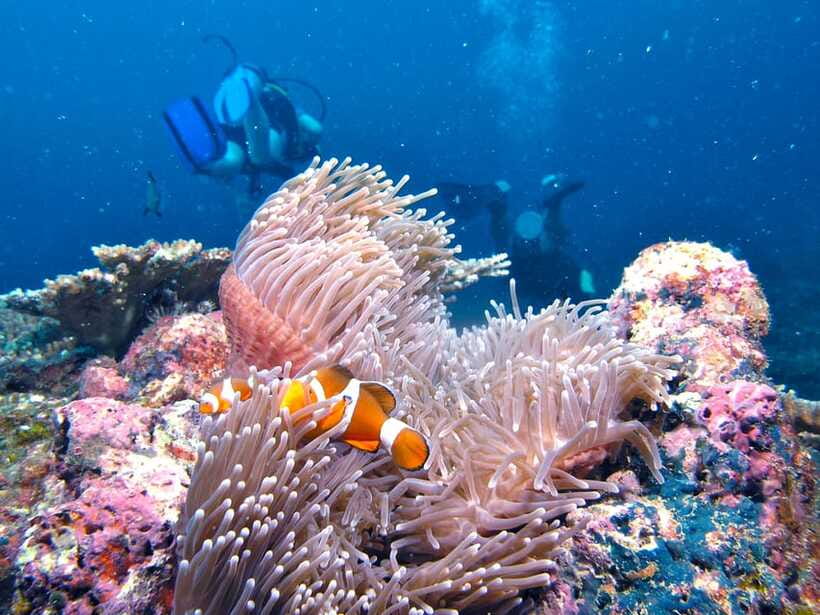
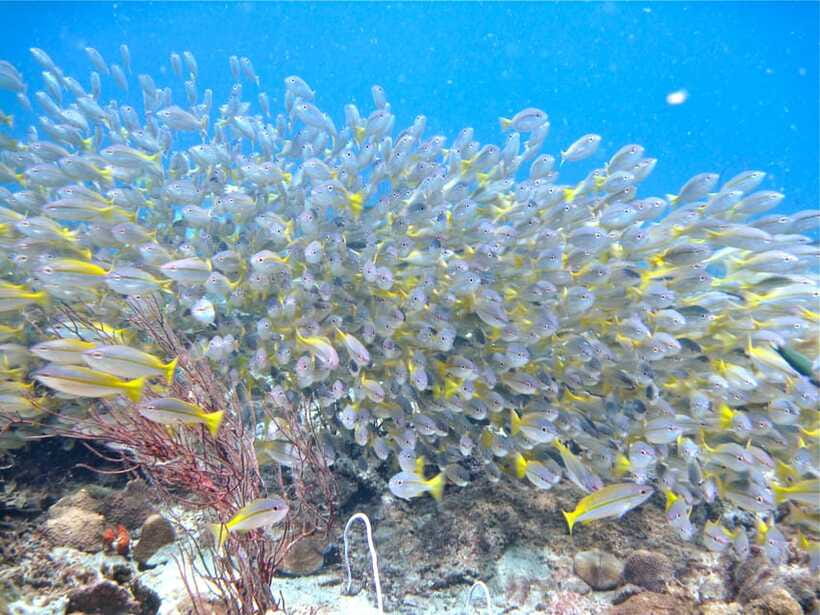
You also get a real Borneo setting, not a generic pool session. Sabah sits in the Coral Triangle, so you are more likely to see a good mix of corals and tropical fish than in places with less variety. And yes, the marine highlights can include clownfish, including the very popular Nemo style fish, and the chance of a turtle if you are lucky.
Sabah side, a few more we rated
- Guided Snorkeling Day Trip, Kota Kinabalu, Sabah, Malaysia★ 5.0 · 282 reviews
- Borneo (Klias) River Cruise & Fireflies Tour★ 4.5 · 126 reviews
- Kota Kinabalu: Snorkeling & Island Hopping Sapi & Manukan★ 3.9 · 97 reviews
- Leisure Diving | Fun Dives | 3 Dives in TARP, Kota Kinabalu★ 5.0 · 94 reviews
Price and the real cost: $112 plus the permit math
The stated price is $112 per person for a 7-hour experience. For what you get, that is often good value compared with DIY boat plans plus separate instruction, since this includes the information session, confined open water skills work, your two underwater sessions, gear, refreshments, and lunch.
That said, your total cost can change depending on your permit. The Sabah Parks underwater permit is not included, and the cost depends on whether you are Malaysian or not: RM 125 for non-Malaysian and RM 58 for Malaysian. If you want to estimate your budget, treat the $112 as the core package price, then add the permit cost on top.
Also note what is not included: hotel pickup is not part of the package. You will need to get yourself to DBKK Jetty in central Kota Kinabalu. Private instructor time is available only as an extra charge, so if you want one-on-one help beyond the small group setup, you should plan for that additional fee.
Meeting at DBKK Jetty: how the day actually flows
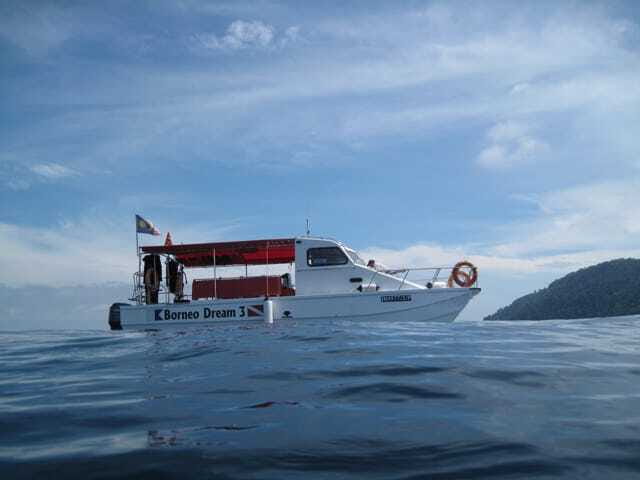
This day is built around one simple hub: DBKK Jetty in central Kota Kinabalu. The crew meets you at 8:45am at the jetty, by the DBKK Jetty poster with the Grab pick-up and drop-off signage. If your hotel is central, you are usually looking at a short stroll or a quick taxi ride, which keeps stress low.
The sea part starts soon after. Boats depart from DBKK Jetty around 9:00am, then head out toward the marine park area. This matters because your first water time happens in the morning when conditions are often steadier, and you are not racing the schedule after a long day of travel.
The morning prep: forms, safety talk, and getting comfortable
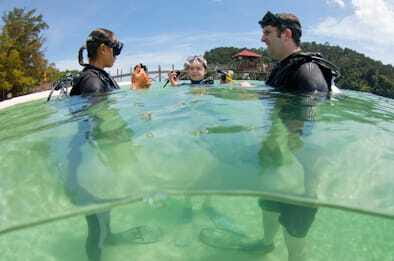
Before you put on gear, you do paperwork and a short scuba intro education session with your instructor. This is not the kind of lecture where you hope it sinks in by magic. It is practical, and it sets up how you will move, breathe, and handle basic situations underwater.
Then comes the confined open water skills session. In plain terms, this is where you prove to yourself that the gear makes sense and the procedures are doable. If you start feeling nervous, this is the part that usually helps, because you get feedback in the water right away and not during the reef part.
The language lineup is also useful. Instructors can work in Chinese, English, or Malay, and that can make a big difference if you want to understand every step clearly instead of half-following.
First reef swim: sheltered bays, calm water, and coral close-ups
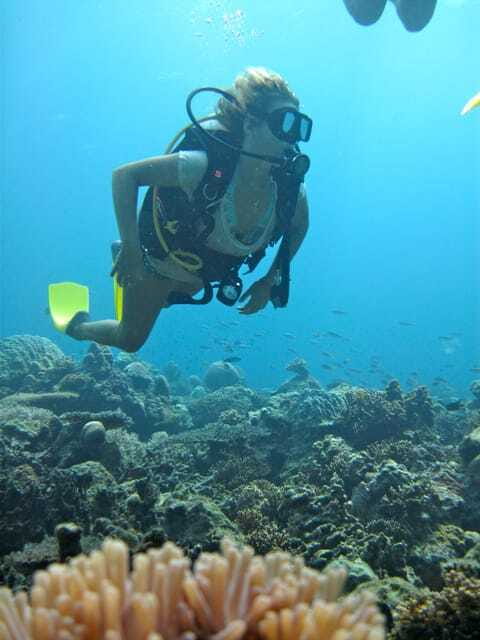
Your first underwater session is in a shallow, protected bay near one of the islands in the marine park. The goal here is comfort, not bravado. You typically stay down to about the 40 feet range, which is around 12 meters at the deepest portion for the day, but the first session is usually easier because the area is sheltered and the water is more forgiving.
This is where you start noticing how different the underwater world looks compared with what you see on a screen. Coral texture becomes real. You can also pick up on fish behavior, how they hover, dart, or hold position around coral heads. In one example, the instructor used a small slate to write out fish information underwater, and when a new fish appeared, there was a clear cue so everyone could look at the same thing. That little teaching style makes the experience feel personal, not generic.
Under the surface, other Borneo dives
What you might see: clownfish, coral variety, and turtle luck
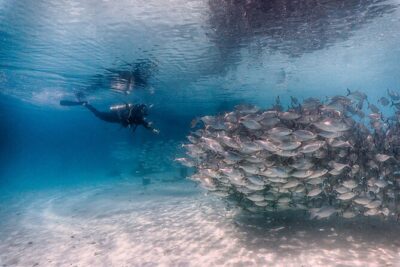
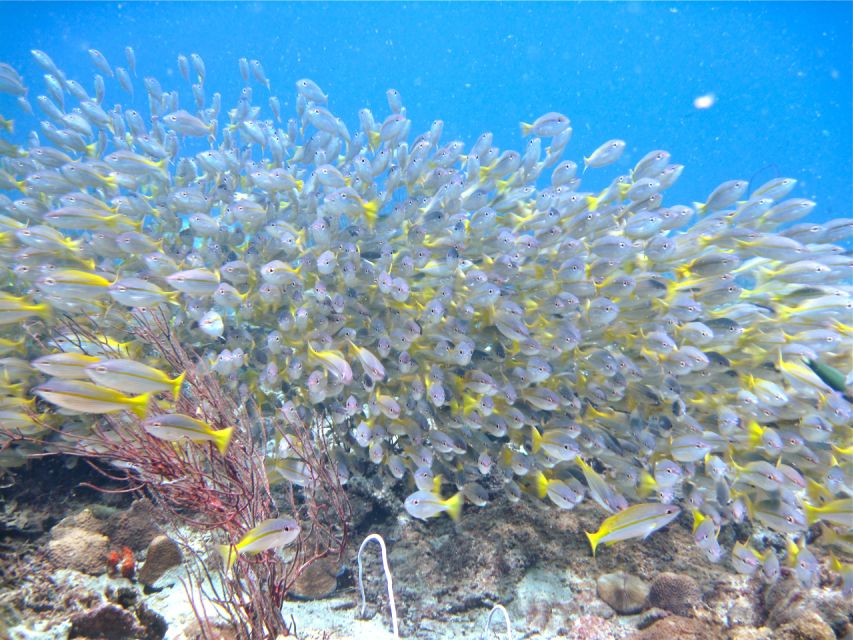
The marine life in this area can be a major reason to book. In the Coral Triangle, corals are diverse, and the fish tend to be colorful and active. You are specifically set up to spot the kind of fish that makes beginners feel like they are getting a real deal, not a filler activity. Clownfish are a standout possibility, including the Nemo look.
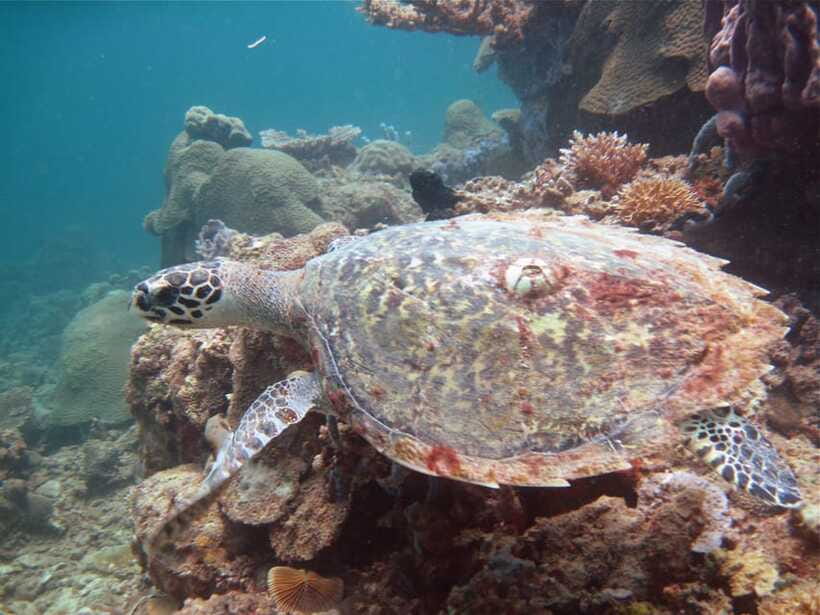
Turtles are another draw. The chance is mentioned, and in at least one case, a participant saw turtles twice during the scuba water time. That does not mean every day guarantees turtles, but it does suggest the location and the style of searching can pay off.
If you are the type who wants a clear, payoff-oriented plan, this is one of the best ways to get it: you are not waiting hours in the hope that something happens. You are in the water, looking actively, with an instructor guiding your attention.
Island lunch in the Tunku Abdul Rahman Park: Pulau Mamutik or Pulau Sapi
Between the two underwater sessions, you take a proper break on land. Lunch runs from about 12:00pm to 1:30pm, and you eat on an island in the marine park, commonly Pulau Mamutik or Pulau Sapi.
This is not just a “fuel stop.” It is a mental reset. After the gear work and the first water time, you want a chance to warm up, hydrate, and let your breathing calm back down. It also helps that the day is built on a smooth rhythm: water, land, water, then back to the jetty.
The menu is included, and you also get refreshments during the day, including water plus snacks like biscuits and sweets. That sounds small until you are actually out on boats and reefs all morning. Then it feels like someone planned ahead, which they clearly did.
Second reef swim: a max around 12 meters, then back to the city
After lunch, you get a briefing for your second underwater session. You gear up again and head back into the water with your instructor. This second part is often where people feel more confident. The first session teaches the basics, and the second one lets you focus more on what you are seeing.
Depth for the overall day is about a maximum of 12 meters, roughly 40 feet. The intent is still beginner-friendly: you are not doing deep-tech stuff, and the experience is designed as an introduction rather than a major challenge.
When it is done, you return to DBKK Jetty, typically leaving the marine area around 3:00pm and arriving back around 3:30pm. That short, tidy return time is a nice match for a city base. You can still have an evening in Kota Kinabalu without feeling like the day swallowed your plans whole.
Small group setup and the instructor factor
One of the biggest quality signals here is the small-group structure. You get more individualized attention, which helps with both learning and comfort. It is easier to understand instructions, and you are less likely to lose your place in the process when you are not on a huge team.
The instructor also makes a huge difference, and there are clear signs of that in the way people describe the day. Amil, for example, was mentioned as the guide in a family booking, and the group range included ages 16 to 52. That matters because it suggests the teaching style worked across different comfort levels.
I also like that instruction can be active and creative. Using a slate underwater to write fish info, then giving a signal when something interesting appears, turns your look-around time into real learning. And if you are worried about understanding the basics, know that they can teach in English, Chinese, or Malay, depending on your group.
Gear, comfort, and what you need to know about health rules
The package includes high-quality scuba gear, plus a towel and refreshments. You do not need to bring equipment, and that reduces the usual hassle factor. Gear fit matters more than people think, especially for beginners, and having it provided as part of the day keeps things simpler.
There are also clear health prerequisites. You must be at least 10 years old, comfortable in the water, and have basic swimming skills. You will self-certify that you are healthy enough for scuba, especially regarding respiratory and circulatory systems. If you have respiratory issues, this experience is not suitable.
One more important rule if you plan flights soon after: you need a minimum of 18 hours free after your scuba water time before flying on a plane. If your schedule is tight, build your travel buffer in advance so you are not stuck guessing.
Who this is best for in Sabah
This is built for non-divers and beginning divers who want to experience the underwater world in a structured, safety-focused way. It works well if you are traveling with family, as long as everyone meets the age and health prerequisites. One example booking included a mixed-age group, and the experience was described as educational, fun, and well-paced.
It is also a good choice if you want a full day but not a long, multi-day training commitment. You get the introduction in one day, then two underwater sessions in the marine park with instruction and supervision.
If you are an experienced diver, you might find the depth and structure more basic than you want. But if you are the kind of diver who enjoys showing a friend or relative the underwater world, the small-group approach and the beginner coaching can still be a plus.
Should you book the RAID try-scuba day in Kota Kinabalu?
If you want a beginner-friendly way to see corals and tropical fish in Sabah, and you like the idea of a day that is structured, supervised, and not overly complicated, I would say this is a strong booking. The price is reasonable for a guided, gear-included, boat-and-lunch package, and the small-group teaching style helps people actually learn what they need.
Book it if:
- You meet the age and swimming requirements and you are healthy enough for scuba
- You want two underwater sessions with an instructor and a real reef chance for clownfish and possibly turtles
- You prefer a single-day plan out of Kota Kinabalu with an island lunch break
Skip or reconsider if:
- You have respiratory issues
- You have a flight within 18 hours of your planned water time and you cannot adjust your schedule
- You are planning to rely on hotel pickup, since that part is not included
If that checklist works for you, this is one of those Sabah activities that tends to land as a “wow, I did it” memory, not just another box checked.
FAQ
How long is the RAID try-scuba experience?
The duration is listed as 7 hours.
Where does the tour start?
Boats depart from DBKK Jetty in central Kota Kinabalu, and the meeting point is 8:45am at DBKK Jetty by the DBKK Jetty counter poster with the Grab pick-up and drop-off signage.
How many underwater sessions do I do?
You do two underwater sessions as part of the experience.
What is the maximum depth?
The second underwater session has a maximum of about 40 feet, or 12 meters.
Is scuba gear included?
Yes. High-quality scuba gear is included, along with a towel.
What is included for food and snacks?
You get refreshments during the day (water, biscuits, and sweets) and lunch on an island in the Tunku Abdul Rahman Marine National Park, typically Pulau Mamutik or Pulau Sapi.
What is not included in the price?
Hotel pickup is not included, and the Sabah Parks underwater permit is not included. Travel insurance for unforeseen circumstances is also not included.
Do I need a permit?
Yes, a Sabah Parks underwater permit is required, and the cost is RM 125 for non-Malaysians and RM 58 for Malaysians.
Who can take part and what are the minimum requirements?
You must be 10 years or older, comfortable in the water with basic swimming skills, and in good overall health. You will self-certify before starting and complete the required forms.
Is it safe to fly right after the experience?
You must have a minimum of 18 hours free after your scuba water time before flying on a plane.
More Tour Reviews in Kota Kinabalu
More Dives out of Semporna
Sabah, More From Us
Other Kota Kinabalu write-ups from our reviewers
- Sabah: White Water Rafting Grade 3-4 at Padas River
★ 4.7 · 3 reviews - Kinabalu Park Day Trip
★ 3.5 · 3 reviews - Kota Kinabalu : Mari-Mari Cultural Village Day Tour
★ 4.7 · 3 reviews - Kota Kinabalu | Snorkeling Sapi Island/Manukan Island
★ 3.1 · 3 reviews - Full Day JomTour! Memorable Experience in Kota Kinabalu, Sabah
★ 3.0 · 4 reviews
More Semporna & Borneo Diving Trips.
 ★ 5.0Leisure Diving | Fun Dives | 3 Dives in TARP, Kota KinabaluFrom $10594 reviews
 ★ 5.0Learn to Dive | RAID Open Water 20 Diver Course | Kota KinabaluFrom $37579 reviews
 ★ 4.3Semporna: Bohey 3 Islands Hike, Snorkel/Dive Tour with LunchFrom $5850 reviews
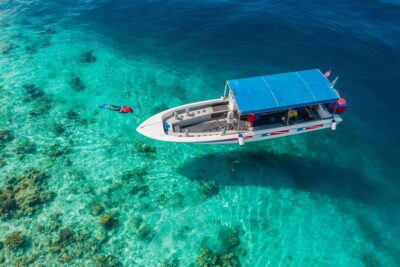 ★ 4.4Semporna: Explore 3 Islands Tour Snorkel or Dive & LunchFrom $5744 reviews
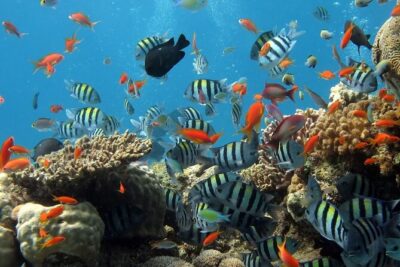 ★ 5.0RAID Try-Dive Experience in Kota KinabaluFrom $11043 reviews
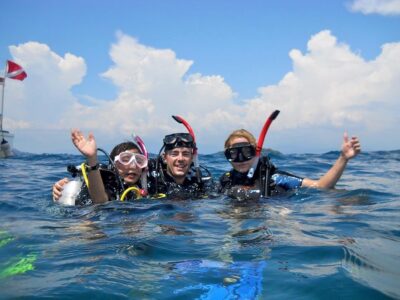 ★ 5.0Join us for a RAID Try Dive in Kota KinabaluFrom $11027 reviews
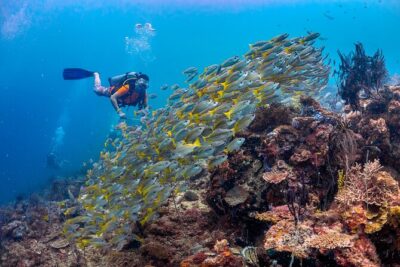 ★ 5.0(3 Days) PADI Open Water Diver Course Kota KinabaluFrom $43723 reviews
 ★ 5.0TRY SCUBA (non diver)From $12221 reviews
Other Malaysia lists with this tour