
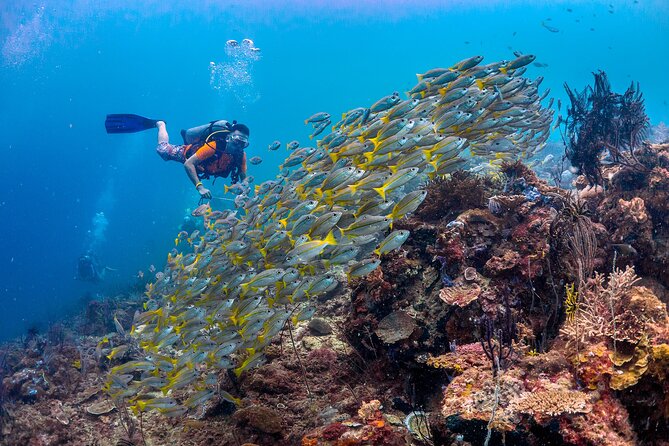
REVIEW · SEMPORNA & BORNEO DIVING TRIPS
(3 Days) PADI Open Water Diver Course Kota Kinabalu
Three days is all it takes. I like the fact that this course is run by Go Aquatic and is easy to locate in Kota Kinabalu, plus you get scuba equipment handled for you so you do not need to organize gear. I also love that lunch is included every day, and there is bottled water on the boat to keep the day moving. One thing to consider: there is no pick-up or drop-off, and a dry towel is not included, so you will want to plan your own trip to the meeting point.
This is a true learn-and-practice program, built for a group format with instructor support and clear steps toward certification. You start with theory in a training room, then move into hands-on water skills near the beach area around Sapi Island, and finish with more open-water sessions plus an exam. The small-group setup (maximum 4 students per instructor) makes it feel structured, not rushed.
If you have ever wanted PADI Open Water certification without the hassle of booking everything separately, this course is designed for that. Just be ready for early classroom time and for water days where comfort and simple prep matter.
In This Review
- Key Things That Make This Course Work So Well
- Kota Kinabalu Is a Smart Setting for Your PADI Open Water Course
- Day 1: Theory From 10:00 to 3:45 in the Training Room
- Day 2: Confined Water Skills Near Sapi Island (Plus the Skills Check)
- Day 3: Open-Water Sessions, Final Exam, and Certification
- The Course Areas: Sapi Island, Tunku Abdul Rahman Marine Park, and Jesselton Point
- Price and Value: What You Get for $437.93
- Instructor Style, Group Size, and Why That Feels Different
- What You Should Bring (And What You Can Stop Stressing About)
- Food, Water, and Staying Comfortable on a Water Schedule
- Logistics That Matter: Meeting Point, Timing, and How the Day Feels
- Who Should Book This Course in Kota Kinabalu
- Should You Book the PADI Open Water Diver Course?
- FAQ
- What time does the course start on the first day?
- Where is the meeting point?
- Is pick-up or drop-off included?
- Are meals and equipment included?
- How many students does an instructor teach?
- Is this booking refundable if plans change?
Key Things That Make This Course Work So Well
- Small instructor ratios: one instructor teaches a maximum of 4 students, so you get more time to practice each skill.
- Equipment is provided: no separate gear rental, no last-minute shopping, and less stress before getting wet.
- Daily energy boost: lunch is included every day, plus bottled water (500ml) during the activity.
- Hands-on progression: confined-water training on day 2, then the final required open-water sessions and exam on day 3.
- Clear meeting point: Go Aquatic at Lot G30, Wisma Sabah, near public transportation, with an end back at the same spot.
Sabah side, a few more we rated
- Guided Snorkeling Day Trip, Kota Kinabalu, Sabah, Malaysia★ 5.0 · 282 reviews
- Borneo (Klias) River Cruise & Fireflies Tour★ 4.5 · 126 reviews
- Kota Kinabalu: Snorkeling & Island Hopping Sapi & Manukan★ 3.9 · 97 reviews
- Leisure Diving | Fun Dives | 3 Dives in TARP, Kota Kinabalu★ 5.0 · 94 reviews
Kota Kinabalu Is a Smart Setting for Your PADI Open Water Course
Kota Kinabalu is a practical choice for learning, because you can combine real open-water training with logistics that do not eat your whole day. The course uses local start points around the city, and it rotates between training areas tied to the Tunku Abdul Rahman Marine Park region and nearby boat departures.
For you, the big win is that the course is built around a progression you can feel: classroom basics, then skill drills in calmer conditions, then the final practical sessions with an exam. That order matters. You learn the why first, then you repeat the how until it clicks.
There is also a “get it done” quality here. The course is scheduled as a tight three-day run (the first day is clearly defined), and you finish with certification if you pass the exam and complete the required sessions. If you are on a trip where time is limited, that structure is worth its weight in wetsuit-days.
Day 1: Theory From 10:00 to 3:45 in the Training Room
Day 1 is classroom-based: theory runs from 10:00 AM to 3:45 PM in the training room. This may not sound thrilling, but it is exactly what you want early on. When you understand buoyancy basics, safety steps, and core gear functions before you hit the water, your practical sessions feel less like trial and error.
I like that the course frames day 1 as thorough and safe rather than rushing you into water immediately. In a good Open Water course, theory is not paperwork. It is the tool that keeps you calm when you feel new sensations like breathing under pressure and managing your buoyancy.
Practical tip: treat day 1 like a classroom day, not a casual tour day. Hydrate, eat normally, and ask questions when something feels unclear. The clearer your understanding is going into day 2, the smoother your skills practice tends to be.
Day 2: Confined Water Skills Near Sapi Island (Plus the Skills Check)
On day 2, you move into practical hands-on scuba training with your instructor. The format keeps groups small: typically, each instructor takes on a maximum of 4 students. That ratio is a big deal in the water, because it reduces waiting time and gives you chances to correct technique on the spot.
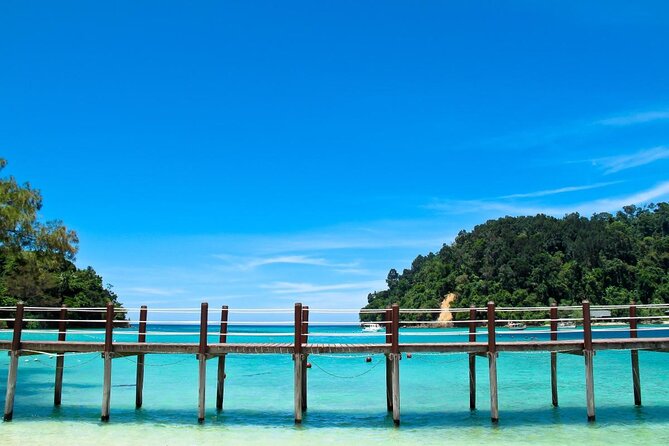
You start in a confined water area near the beach in the Sapi Island area. The location is about 15 minutes from the jetty in the city center. Even without exact minute-by-minute timing for the full day, that short transfer window usually helps your energy stay steady, because you spend less time in transit and more time practicing.
This is the day when you complete the first two required Open Water course sessions (the program is structured as multiple required sessions, and day 2 covers the first part). Confined water setups are where you learn the muscle memory: gear checks, controlled breathing, and safe handling under your instructor’s watch.
What to watch for: confined water can still feel intense if you are nervous. If you get overwhelmed, focus on one skill at a time. The goal is not to be perfect on your first try. The goal is to be safe, consistent, and ready to progress on day 3.
Day 3: Open-Water Sessions, Final Exam, and Certification
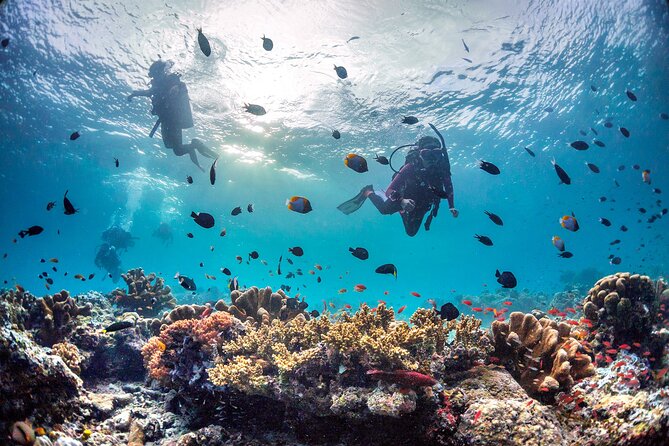
Day 3 is the finish line. You continue with practical hands-on scuba training with your instructor, and this day is about completing the next two required Open Water sessions, then sitting for the final exam.
If you pass the exam and complete all required sessions, your instructor will certify you as a new PADI Open Water Diver. After a few days, you should receive your license or your PADI Diver ID (license number). That “a few days later” timing matters, because you will likely want to plan any future dive plans after you get your official details.
This day can feel both exciting and pressure-y, because you are wrapping up everything you learned. My advice is to approach it like a practical check, not a test of bravery. If you follow instructions, stay calm, and keep your focus on safety and control, you are in the right mindset to succeed.
Also, pay attention to how your course handles the exam. The data here does not list the exam format, but it is clearly tied to your course completion. The best way to prepare is to review what you learned on day 1 and use your day 2 practice to build confidence.
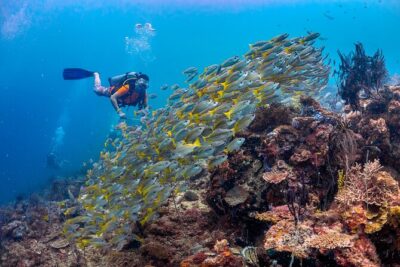
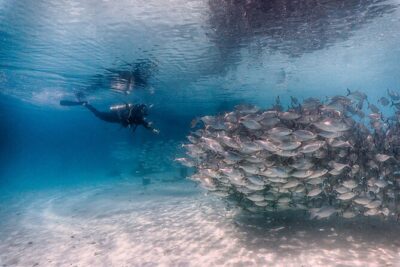
Under the surface, other Borneo dives
The Course Areas: Sapi Island, Tunku Abdul Rahman Marine Park, and Jesselton Point
You get three major location anchors during the course: Sapi Island, the Tunku Abdul Rahman Marine Park, and Jesselton Point. Here is why those matter for you.
- Sapi Island
This is the start of the practical confined-water setup near the beach area on day 2. It is also close enough to the city jetty that you do not spend hours commuting.
- Tunku Abdul Rahman Marine Park
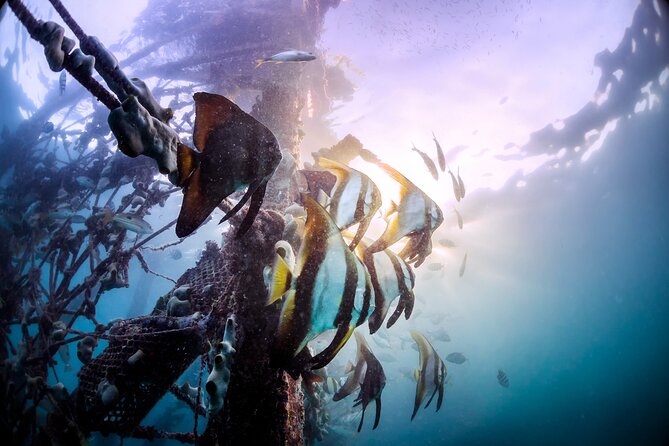
This is part of the open-water experience on the course days. A marine park setting usually means more structured water areas and a well-established diving scene in the region. It can also give you better variety as you move through required sessions.
- Jesselton Point
This is another key stop tied to your activity flow. It is the kind of place where you see how local operators run the day, and it helps you understand why the course can keep a steady schedule across three days.
One small warning: marine areas depend on conditions. The course includes a weather note that the experience requires good weather, so you should be ready for the schedule to be adjusted if conditions are not ideal.
Price and Value: What You Get for $437.93
At $437.93 per person for a three-day course, the value here is mostly about what is included, not just the sticker price. You are paying for structured instruction, gear, and daily support that removes several common costs and headaches.
Here is where the money typically makes sense for you:
- Use of scuba equipment included
This saves you from separate gear rental decisions and reduces the chances of arriving under-prepared.
- Lunch every day + bottled water during the activity
This matters more than people think. When your energy drops, concentration drops too, and concentration is what helps you learn and pass.
- All fees and taxes included
Hidden add-ons are often what makes courses feel expensive later. This pricing is positioned to be clear upfront.
What is not included is just as important:
- Pick-up and drop-off are not included.
- Accommodation is not included.
- A dry towel is not included.
So you should mentally add only the non-included items you personally need. If you already have transport to the meeting point and you pack a towel, this course becomes a straightforward “one price, one program” deal.
Instructor Style, Group Size, and Why That Feels Different
The course caps total travelers at 16, and it also limits instructor load to a maximum of 4 students per instructor. That combination tends to keep things orderly.
In real learning situations, that translates to:
- More chances to practice a skill rather than watching others.
- Faster feedback when something does not feel right.
- Less downtime between steps.
The course also includes an English guide and instructor support, and one real-life lesson from the course experience is that patient, step-by-step teaching helps you connect book concepts to real water skills. If you learn best when someone explains clearly and gives you room to practice safely, this setup is designed with that in mind.
What You Should Bring (And What You Can Stop Stressing About)
The course handles gear for you, which is a huge relief. You do not need to arrange scuba equipment separately.
But you should plan around what is not provided:
- You need your own dry towel (not included).
- You will handle your own transport because pick-up and drop-off are not included.
- You will want basic sun and water comfort, since this is a full day of training outdoors on water days.
Also, remember the course runs as a mobile ticket experience. That is usually helpful for keeping things simple at the start of day 1.
If you are the type who packs early, bring everything you think you might need for comfort and quick drying. It is one less stress line in a course where your attention should stay on skills and safety.
Food, Water, and Staying Comfortable on a Water Schedule
Lunch is included every day, and it is described as a la carte at an island’s restaurant with fresh cooking and fresh service. That is a meaningful detail because fresh meals often agree better with your energy and focus than random snacks.
During the scuba activity, the course provides bottled water, 500ml. That helps you keep hydrated through the day without scrambling for drinks between steps.
My practical takeaway: treat lunch and hydration as part of your learning plan. When you are not thinking about hunger or thirst, you can focus on the course flow and your instructor’s cues.
Logistics That Matter: Meeting Point, Timing, and How the Day Feels
You start and end back at the meeting point. The address is Go Aquatic, Lot G30, Ground Floor, Wisma Sabah, Jln Haji Saman, Pusat Bandar Kota Kinabalu, 88000 Kota Kinabalu, Sabah, Malaysia. Start time for day 1 is 10:00 AM.
This matters because it removes a chunk of uncertainty. You know exactly where to go and you do not need to figure out where you end up each day.
The course is near public transportation, so if you are already using local transport, it can be easier to fit into your schedule. Still, because pick-up and drop-off are not included, give yourself a bit of buffer time getting there.
If you are prone to motion sickness or water-day stress, plan to arrive rested on day 1. Once theory starts, you will be better off if your body is already calm.
Who Should Book This Course in Kota Kinabalu
This course is a strong fit if:
- You want PADI Open Water Diver certification in a structured three-day window.
- You prefer small-group instruction with maximum 4 students per instructor.
- You do not want to organize scuba gear yourself.
- You want daily lunch included so you can focus on learning.
It may not be the best choice if:
- You are not able to commit to full water-day participation for multiple required sessions.
- You need pick-up and drop-off to handle transport.
- You are traveling with very young kids. The course is not recommended for travelers under 10 years of age.
Should You Book the PADI Open Water Diver Course?
I would book this course if you want a clean, organized path to certification without gear hassle. The value is built on included equipment, daily lunch, and a small instructor ratio that supports real learning, not just “watch and follow” training.
Skip it or reconsider if you rely on transportation support and you do not want to arrange your own way to the meeting point, since pick-up and drop-off are not included. Also, if you tend to dislike water-based schedules, remember this is a three-day progression with practical sessions plus a final exam.
If you show up ready to learn, follow safety instructions, and bring simple essentials like a dry towel, this looks like a practical, high-success way to turn Kota Kinabalu into a real certification milestone.
FAQ
What time does the course start on the first day?
The activity start time is 10:00 AM on day 1.
Where is the meeting point?
Meet at Go Aquatic, Lot G30, Ground Floor, Wisma Sabah, Jln Haji Saman, Pusat Bandar Kota Kinabalu, 88000 Kota Kinabalu, Sabah, Malaysia.
Is pick-up or drop-off included?
No. Pick-up and drop-off service is not included.
Are meals and equipment included?
Yes. Lunch is included every day, and the use of scuba equipment is included. Bottled drinking water (500ml) is provided during the scuba activity.
How many students does an instructor teach?
One instructor teaches a maximum of 4 students, and the total group size is capped at 16 travelers.
Is this booking refundable if plans change?
No. This experience is non-refundable and cannot be changed for any reason. If it is canceled due to poor weather, you will be offered a different date or a full refund.
More Tour Reviews in Kota Kinabalu
More Dives out of Semporna
Sabah, More From Us
Other Kota Kinabalu write-ups from our reviewers
- Sabah: White Water Rafting Grade 3-4 at Padas River
★ 4.7 · 3 reviews - Kinabalu Park Day Trip
★ 3.5 · 3 reviews - Kota Kinabalu : Mari-Mari Cultural Village Day Tour
★ 4.7 · 3 reviews - Kota Kinabalu | Snorkeling Sapi Island/Manukan Island
★ 3.1 · 3 reviews - Full Day JomTour! Memorable Experience in Kota Kinabalu, Sabah
★ 3.0 · 4 reviews
More Semporna & Borneo Diving Trips.
 ★ 5.0Leisure Diving | Fun Dives | 3 Dives in TARP, Kota KinabaluFrom $10594 reviews
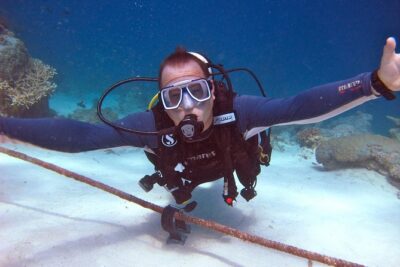 ★ 5.0Learn to Dive | RAID Open Water 20 Diver Course | Kota KinabaluFrom $37579 reviews
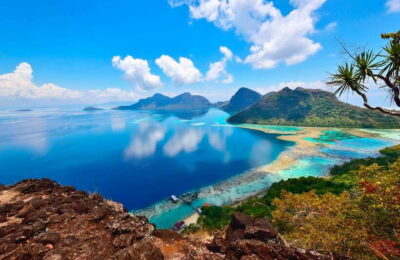 ★ 4.3Semporna: Bohey 3 Islands Hike, Snorkel/Dive Tour with LunchFrom $5850 reviews
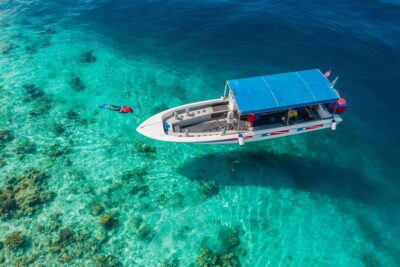 ★ 4.4Semporna: Explore 3 Islands Tour Snorkel or Dive & LunchFrom $5744 reviews
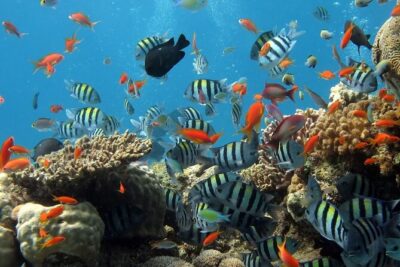 ★ 5.0RAID Try-Dive Experience in Kota KinabaluFrom $11043 reviews
 ★ 5.0Join us for a RAID Try Dive in Kota KinabaluFrom $11027 reviews
 ★ 5.0TRY SCUBA (non diver)From $12221 reviews
 ★ 4.2Semporna: Mabul and Kapalai Trip in Snorkel or Dive & LunchFrom $5712 reviews
Other Malaysia lists with this tour