
REVIEW · MALACCA HERITAGE DAY TRIPS
Melaka UNESCO City Guided Walking Tour – Tip Based
One good walk, and Melaka starts making sense fast. In about 2.5 hours, this guided route stitches together Portuguese, Dutch, Malay, and Peranakan stories in a way you can actually picture. I especially like the small-group pace and the way the stops connect, plus the guide storytelling I’ve heard is consistently top-notch, including guides like Mimi and John. The main thing to consider is that it is tip-based, so your real cost is the booking fee plus what you choose to tip (often suggested around RM50-100 per person).
You’ll see Melaka’s key landmarks up close, many with free entry, and you’ll finish in the heart of the old-town energy around Jonker Street. If you want a quick, high-value orientation to this UNESCO-listed area, this kind of guided walk is a solid fit. One possible drawback: it is still a walking route, so you’ll want decent mobility for the pace and heat.
In This Review
- Key highlights you will care about
- Why this UNESCO walk works in 2.5 hours
- Price, tips, and what your RM50-100 really changes
- Meeting, route flow, and the walking reality
- Stop-by-stop: Christ Church to A Famosa, then Jonker
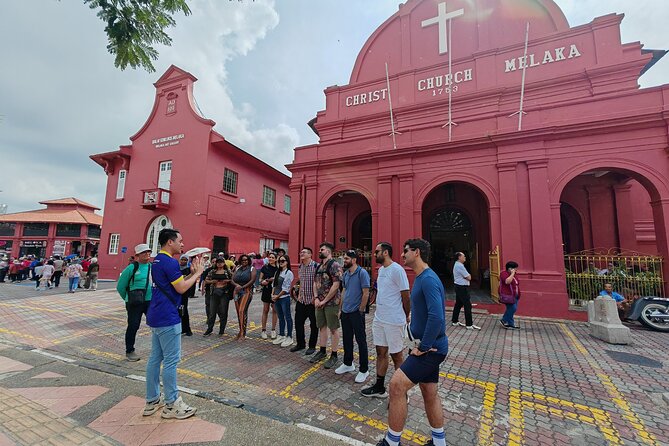
- Stop 1: Christ Church, the long-running Anglican landmark
- Stop 2: Red Square (Dutch Square), Dutch power in the tropics
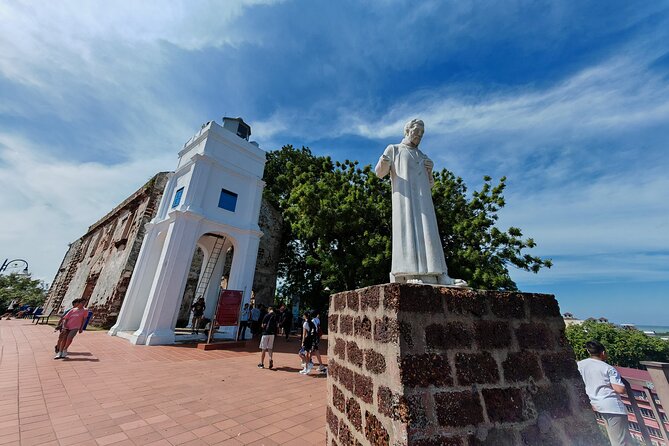
- Stop 3: St. Paul’s Hill and Church, Portuguese roots and a famous missing hand
- Stop 4: Malacca Sultanate Palace, Malay court life in reconstructed form
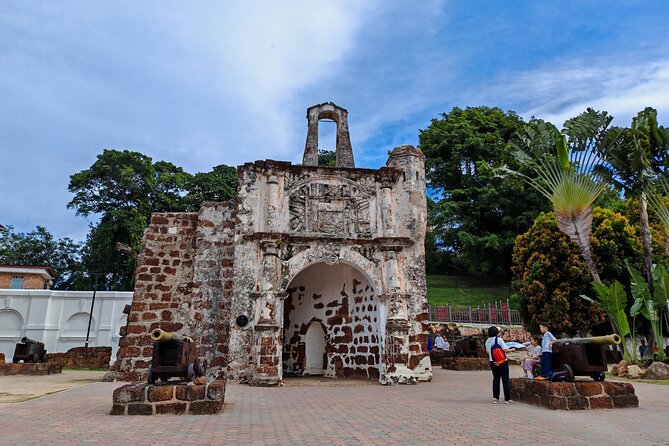
- Stop 5: A Famosa Fort, the Portuguese gateway that survived
- Stop 6: Proclamation of Independence Memorial, from empire to independence
- Stop 7: Malacca River, the trade route that became a heritage quarter
- Stop 8: Melaka Tourist Information Center, the sang kancil origin story
- Stop 9: Jonker Street, where old shophouses meet street life
- Stop 10: Baba & Nyonya Heritage Museum, the Peranakan lifestyle in context
- Stop 11: Chee Ancestral Mansion, a Dutch façade with Peranakan interior
- Stop 12: Hotel Puri Melaka, Straits Chinese décor tied to philanthropy
- How Dutch, Portuguese, and Malay layers fit into one mental map
- Peranakan culture stops you should not rush
- Jonker Street timing, plus a river you will remember
- Your guide can make or break the whole walk
- Who should book this walking tour, and who should skip it
- Should you book this tour?
- FAQ
- FAQ
- How long is the Melaka UNESCO City guided walking tour?
- Where does the tour start?
- Where does the tour end?
- Is the tour guided, and is there an English-speaking guide?
- Is this a tip-based tour?
- What is the recommended tip amount?
- Are the stop sites free to enter?
- Do I need a mobile ticket?
- What kind of fitness level is needed?
- How many people are on the tour?
Key highlights you will care about
- Small group (up to 5), so you get real answers instead of hearing history through a megaphone.
- Christ Church, A Famosa, St. Paul’s Hill in one loop, so you do not waste a day zigzagging.
- Peranakan culture stops at places like the Baba & Nyonya Heritage Museum and nearby heritage buildings.
- Jonker Street coverage, including the street-life rhythm that changes across the week.
- Story-driven guiding, with guides such as Mimi and John praised for making the city click.
- Many sites are free to enter, which keeps the experience budget-friendly.
Still on the Melaka question? These come up too
- Small Group Melaka After Dark Food Tour★ 5.0 · 16 reviews
- Small Group Melaka Flavours Food and Culture Tour★ 5.0 · 11 reviews
- Melaka Hotels to Kuala Lumpur Hotels★ 5.0 · 3 reviews
Why this UNESCO walk works in 2.5 hours
Melaka’s UNESCO core is packed. If you try to do it alone, you can end up checking boxes but missing how the city layers on top of each other. This walk is built around a logical route that keeps momentum and helps you build a mental map before you wander on your own.
At roughly 2 hours 30 minutes, the timing is long enough for real context, but short enough to still enjoy independent exploring afterward. I like that the tour includes a mix of big landmarks (Christ Church, A Famosa) and smaller cultural stops (heritage houses and museums) that explain how everyday people shaped the city.
You also get the practical side: English-speaking guidance, and a route with multiple stops where admission is listed as free. That combination is why the value feels strong, even when you add in the suggested tips.
Price, tips, and what your RM50-100 really changes
The booking price is listed at $5.20 per person, and the ticket is mobile. That fee is basically your way to secure your spot. Since this is a tip-based tour, you should plan on tipping your guide separately.
The suggestion given is around RM50-100 per person. In my view, that’s the part that turns a good walking tour into a great one, because the guide’s effort is what makes the history legible. If you tip well, you are directly supporting the people telling the stories, not just paying for a fixed itinerary.
There is also a note about a complaint that called it a scam. That kind of reaction usually comes from a mismatch between the word free and the idea of reserving your seat through a paid booking fee. If that wording bothers you, the fix is simple: read how the reservation fee and tips are explained to you before you commit, then decide if you’re comfortable with the structure.
Bottom line, the price plus a fair tip tends to be still low compared with other guided experiences, especially because a bunch of the stops are free to enter.
Meeting, route flow, and the walking reality
You start at Jonker Chocolate House on Jalan Laksamana in Banda Hilir. The tour ends at Monster Day Tours Melaka on Jalan Hang Jebat. You are getting a single direction walk through the historic core, which helps you avoid backtracking.
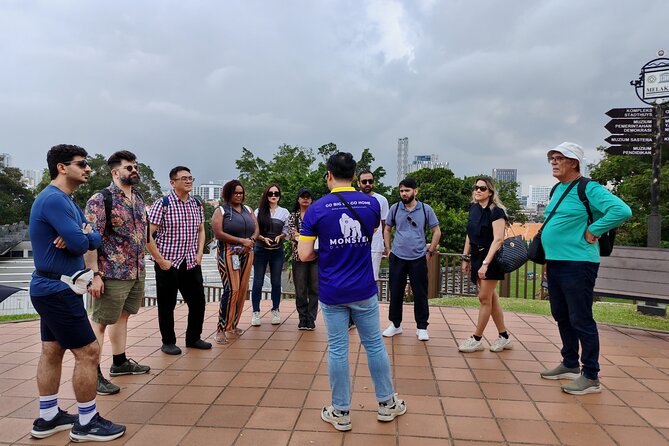
The tour is capped at a maximum of 5 travelers, which matters more than you might think. Smaller groups mean you can ask questions, and guides can adjust pace when someone pauses at a detail on a building or wants one extra story.
The tour notes a moderate fitness level. So yes, you should expect a proper walking loop. If you plan to explore Melaka in the heat right after, pace yourself and bring the kind of attitude that says, yes, this is a walking day.
Stop-by-stop: Christ Church to A Famosa, then Jonker
This is the heart of the experience, and it is arranged so each stop explains a different layer. Here’s how each one plays on the bigger story of Melaka.

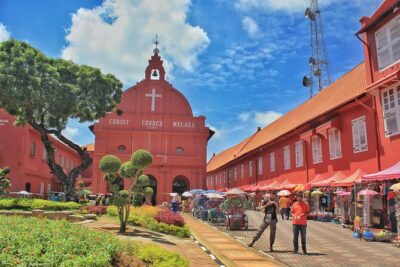
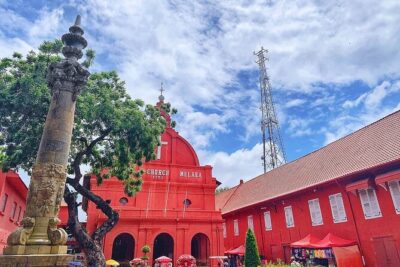
Stop 1: Christ Church, the long-running Anglican landmark
Christ Church is an 18th-century Dutch Protestant church. It is now the oldest functioning Anglican church in Malaysia, which makes it feel like a rare living link between European influence and local continuity.
You spend about 15 minutes here, and because admission is listed as free, it works well for a quick orientation stop. Pay attention to how the building anchors the shift from Dutch control to later British-era religious presence.
Stop 2: Red Square (Dutch Square), Dutch power in the tropics
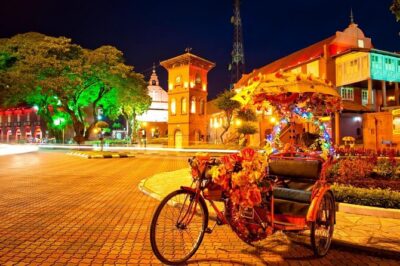
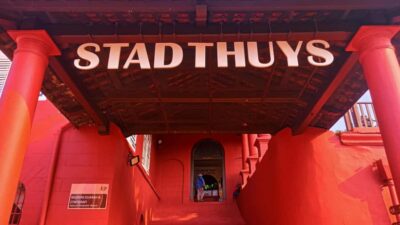
Red Square (Dutch Square) is tied to the former Dutch governor’s residence from 1650. It is basically Dutch civic architecture tuned for Melaka’s climate, which is why it feels less like a museum and more like a real place people once ran daily government from.
It is a shorter stop, around 10 minutes. Use the time to notice how European-style governance showed up in the physical layout.
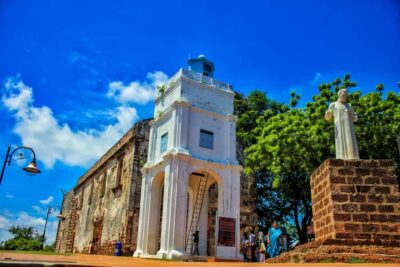
Stop 3: St. Paul’s Hill and Church, Portuguese roots and a famous missing hand
St. Paul’s Hill and its church area include ruins of a 16th-century Portuguese chapel. Later, the Dutch used it as what’s called the Bovenkerk, and the site is described as the oldest European building east of India.
There is also a quick story about a statue of St Francis Xavier that is missing an arm. It is the kind of detail a guide can connect to the larger theme of how European figures became part of local legend and material culture.
Stop 4: Malacca Sultanate Palace, Malay court life in reconstructed form
The Malacca Sultanate Palace stop is a timber reconstruction of Sultan Mansur Shah’s 15th-century palace. Reconstruction can be a mixed bag in travel, but here it functions as a readable snapshot of Malay court life, especially when you have just walked past European structures.
The stop is about 10 minutes. I like it because it prevents the walk from turning into a one-theme European story.
Stop 5: A Famosa Fort, the Portuguese gateway that survived
A Famosa Fort is described as the surviving gateway of the Portuguese fortress from 1512. Once, it enclosed an entire town, so even as a remnant it gives you the sense of scale and control that used to sit here.
Plan on about 15 minutes. This stop tends to work best when you remember that fortifications were not just about war, they were about protecting trade and people moving through the port.
Stop 6: Proclamation of Independence Memorial, from empire to independence
The Proclamation of Independence Memorial is housed in a 1912 mansion turned museum. It celebrates Malaysia’s 1957 independence, which shifts the timeline from centuries of foreign and local mixing into a modern national story.
This one is quick, around 5 minutes. Even short stops like this matter because they prevent a city walk from stopping too early in time.
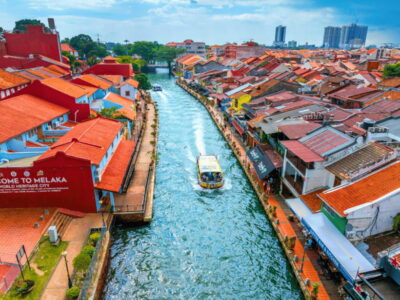
Stop 7: Malacca River, the trade route that became a heritage quarter
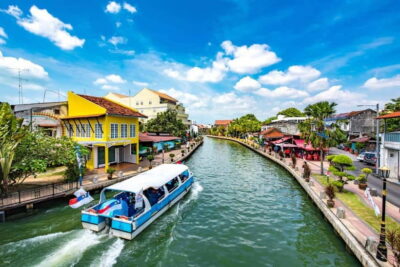
Next is the Malacca River, once a busy entrepôt lined with warehouses. Today it is listed as part of a UNESCO heritage quarter, which is why the river feels like both history and a present-day strolling corridor.
You spend about 10 minutes. Look at the river as a connector, not a backdrop. The port trade explains a lot of what you will see later on streets and in shops.
Stop 8: Melaka Tourist Information Center, the sang kancil origin story
At the Melaka Tourist Information Center, you get the origin story connected to Parameswara. The story says the prince named Melaka after witnessing a brave mousedeer (sang kancil) topple his hunting dog into the river while sitting under the Melaka Tree.
This stop is around 10 minutes. It’s not about monuments, it’s about how local storytelling and place-naming give the city a character you can repeat to friends.
Stop 9: Jonker Street, where old shophouses meet street life
Jonker Street is the Chinatown heartbeat in this route. It is described as antique shops by day, and a night-market from Friday to Sunday.
This stop is about 10 minutes, but it is timed to leave you close enough to keep exploring. When you walk here with context from earlier stops, you can see how trade and migration shaped the streets.
Stop 10: Baba & Nyonya Heritage Museum, the Peranakan lifestyle in context
The Baba & Nyonya Heritage Museum gives you a window into Peranakan culture, the Straits Chinese community, and their lifestyle. It is one of the places where you stop being a tourist observer and start understanding how cultural mixing produced distinct everyday traditions.
You get about 10 minutes. Try to focus on how the home and social life reflect identity, not just aesthetics.
Stop 11: Chee Ancestral Mansion, a Dutch façade with Peranakan interior
The Chee Ancestral Mansion is described as a 1920s hall built by OCBC chairman Chee Swee Cheng. The standout detail is a rare mix of a Dutch façade with a Peranakan interior.
This is a shorter stop, around 5 minutes. That speed is fine if you use the stop to ask yourself a simple question: if the outside says one thing and the inside says another, what story does that mismatch tell?
Stop 12: Hotel Puri Melaka, Straits Chinese décor tied to philanthropy
The final heritage stop is Hotel Puri Melaka, formerly the home of 19th-century philanthropist Tan Kim Seng. The lobby is open for glimpses of lavish Straits Chinese décor, which is a fitting close because it reinforces the Peranakan thread you saw in the museum.
Spend about 5 minutes. You are finishing with design and community memory, not another major monument.
How Dutch, Portuguese, and Malay layers fit into one mental map
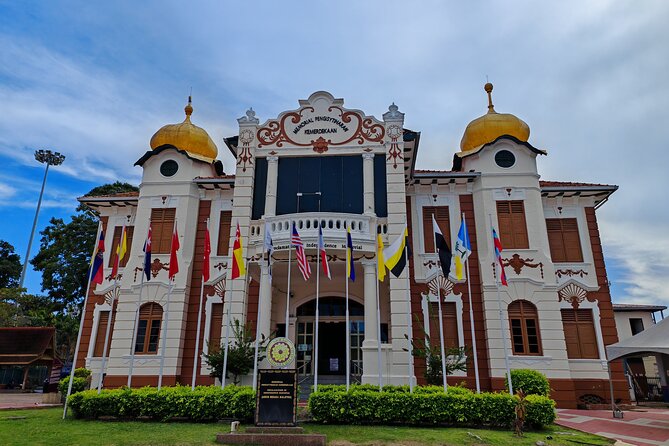
The best part of this walk is that it shows you culture as a stack, not a timeline you memorize. You start with European religious and civic markers like Christ Church and Dutch civic space, then you hit Portuguese remains around St. Paul’s and A Famosa.
Then the walk makes sure you do not get stuck in European stories alone. The Sultanate palace reconstruction acts like a reset, pulling you back to Malay court life and reminding you this was never just a foreign takeover story.
After that, the river and the origin storytelling help you understand why Melaka’s identity became multicultural. It is tied to trade movement and settlement patterns, and it shows up again later in Peranakan culture.
Finally, the independence memorial pulls the timeline forward. That last shift matters because it turns the walk from a history lesson into something that explains why modern Malaysia carries these influences in its own story.
Peranakan culture stops you should not rush
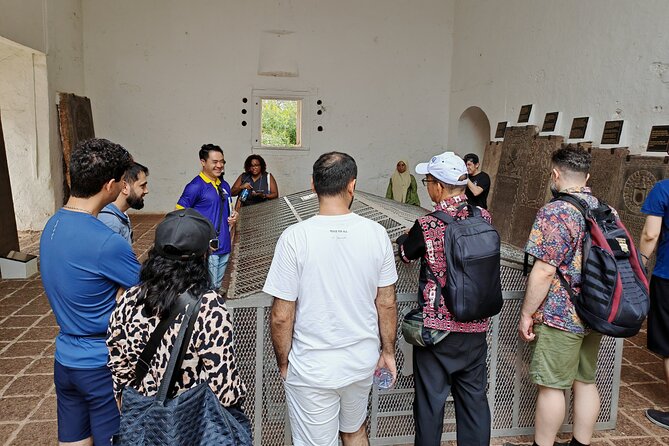
The Peranakan portion is where I think this walk becomes more than sightseeing. The Baba & Nyonya Heritage Museum helps you grasp how Straits Chinese identity formed from contact and local adaptation, so the next heritage houses make more sense.
Then you have the Chee Ancestral Mansion, where the Dutch-style exterior and Peranakan interior are the point. You can use that contrast as a visual clue for cultural blending. It is not just a building, it’s a message.
The last touch, at Hotel Puri Melaka, keeps the focus on Straits Chinese décor tied to a real person, Tan Kim Seng. The goal is not to read everything like a textbook. The goal is to leave understanding that Melaka’s mixed culture is visible in everyday forms, like homes, décor, and community spaces.
Jonker Street timing, plus a river you will remember
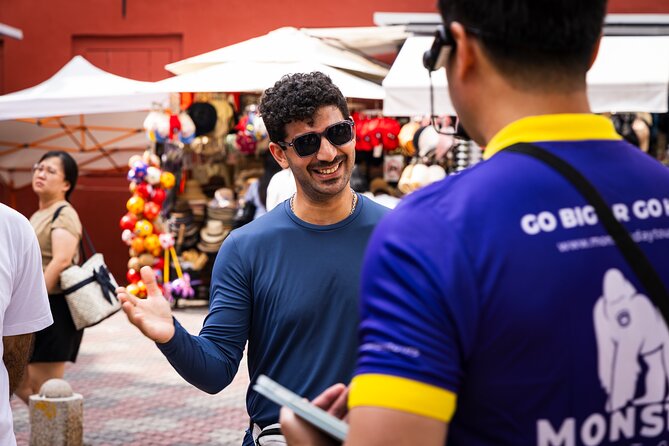
Jonker Street is one of those places where context makes your experience better. With the earlier stops fresh in your mind, you can think about why Chinatown shophouses exist here, and why the night market has an established rhythm.
It is described as antique shops during the day and a night-market from Friday to Sunday. So if your schedule includes one of those days, you may want to linger after the tour ends, because you will already be oriented.
The Malacca River section works as your break between monument energy and street energy. Even if you only spend 10 minutes, you come away viewing the river as the original connector, the thing that made trade possible and shaped the city’s layout.
Your guide can make or break the whole walk
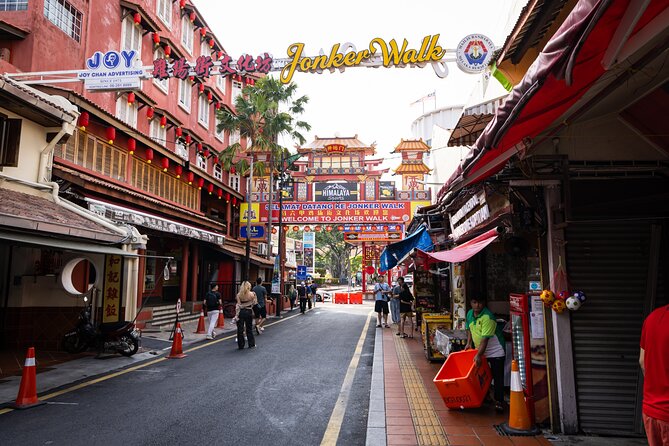
This is the part that shows up again and again in the high scores. Guides like Mimi are praised for funny, passionate storytelling, and for knowing the city so well it feels personal. One review also noted Mimi extended the tour to cover important additional stops, which is a sign of flexibility rather than rigid script.
Another guide mentioned by name is John. He’s described as kind and knowledgeable, with the ability to help you see what is beyond the surface. That style matters because Melaka rewards curiosity. A good guide points out the details your eyes would otherwise slide past.
If you care about stories, this tour is a strong bet. If you prefer silent wandering and minimal talking, a guided format might feel like too much. But for most people, the guidance is what turns landmarks into meaning.
Who should book this walking tour, and who should skip it
This works especially well if you are:
- Visiting Melaka for the first time and want a fast orientation through the UNESCO core.
- Interested in how European and Asian influences coexisted in the same city.
- Hoping to understand Peranakan culture with specific heritage stops, not just general descriptions.
I think you might skip it if:
- You want a self-guided checklist day and do not enjoy walking with a guide.
- You do not like tip-based structures, even when the booking fee is clearly separated from the tip.
If you fall somewhere in the middle, book it with a clear plan for tipping, then enjoy the fact that you are seeing a well-connected loop.
Should you book this tour?
Yes, I would book it if you want maximum value in limited time and you like your history explained in human terms. The mix of major sites and Peranakan heritage stops is what makes the loop satisfying, not just impressive.
Make your decision easy by setting one expectation: this is a walking route with a booking fee plus a guide tip. If you budget for that, the rest clicks into place quickly.
If you enjoy small groups and story-led guiding, this one has the kind of consistency that usually means your time will feel well used.
FAQ
FAQ
How long is the Melaka UNESCO City guided walking tour?
It is about 2 hours 30 minutes.
Where does the tour start?
It starts at Jonker Chocolate House, No. 1, Jalan Laksamana, Banda Hilir, 75000 Melaka, Malaysia.
Where does the tour end?
It ends at Monster Day Tours Melaka, Jalan Hang Jebat, 75200 Melaka, Malaysia.
Is the tour guided, and is there an English-speaking guide?
Yes, it includes a guided city tour with an English-speaking tour guide.
Is this a tip-based tour?
Yes. It is tip based, and the booking fee secures your spot while tips support the guide.
What is the recommended tip amount?
The suggested tip is RM50-100 per person.
Are the stop sites free to enter?
Admission is listed as free for the stops included in the itinerary.
Do I need a mobile ticket?
Yes, the tour features a mobile ticket.
What kind of fitness level is needed?
The tour notes a moderate physical fitness level.
How many people are on the tour?
The tour has a maximum of 5 travelers.
More Tours in Melaka
More Tour Reviews in Melaka
Melaka Beyond the River
Other Melaka write-ups from our reviewers
- Small Group Melaka Flavours Food and Culture Tour
★ 5.0 · 11 reviews - Small Group Melaka After Dark Food Tour
★ 5.0 · 16 reviews - Melaka UNESCO City Guided Walking Tour – Tip Based
★ 5.0 · 35 reviews - Huskitory Connecting People and Dogs
★ 5.0 · 493 reviews
More Malacca Heritage Day Trips.
 ★ 4.4Historical Melaka Day Tour with LunchFrom $422,297 reviews
 ★ 5.0Historical Malacca Guided Day Tour (Shared Tour)From $322,172 reviews
 ★ 5.0Historical Malacca Day Tour from Kuala Lumpur (Private Tour)From $87515 reviews
 ★ 4.6Malacca Day Trip with River Cruise and LunchFrom $78312 reviews
 ★ 4.5Malacca Historical Private Tour With Personal ChauffeurFrom $95151 reviews
 ★ 3.5Melaka River Cruise E-TicketFrom $9129 reviews
 ★ 4.0Malacca Sunset Tour: UNESCO Heritage Highlights & River CruiseFrom $102108 reviews
 ★ 4.5Private Full Day Tour to MalaccaFrom $8894 reviews
Other Malaysia lists with this tour