
REVIEW · KUCHING & SARAWAK TOURS
Kubah’s Nocturnal Wonders Nighttime Frog Safari
At night, Kubah turns into a living soundscape. This Kubah National Park frog safari is built for spotting Borneo amphibians after dark, with a guide helping you read the rainforest by eye and by sound. I especially like the torchlight walking, because it makes the tiny stuff feel close and personal, and I love seeing how guides like Danny can pick out frogs that are basically invisible at first. One real consideration, though, is that wildlife sightings are never guaranteed, so you need to come for the experience as much as the sightings.
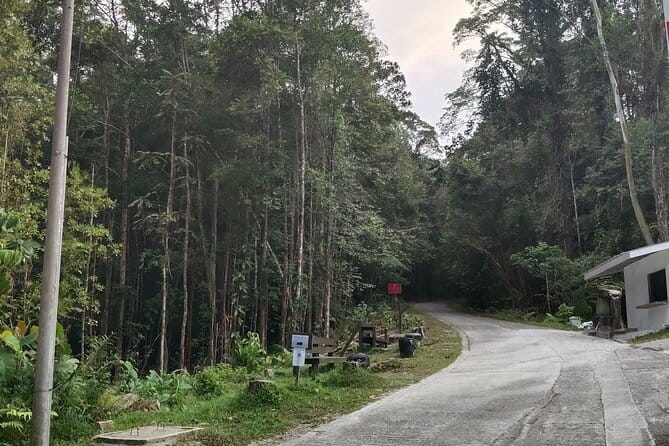
Here’s the core idea: you’re not going to a zoo or a platform. You’re walking on rainforest trails near streams and ponds, using lights to scan movement, then pausing to listen for the frog chorus. In the time window on offer, you get a solid 2 hours inside the park, plus driving time, so it’s long enough to feel like an actual night outing, not a quick photo stop.
Logistics are straightforward. You’ll ride in an air-conditioned vehicle, get head lamps or flash lights, and even receive a disposable raincoat if weather turns. It’s not a long slog, but there is some walking, and this one is not recommended if you have knee trouble or any long-walking limitation.
In This Review
- Key things to know before you go frog hunting at Kubah
- Kubah at night: why this setting is perfect for frog spotting
- The 4 hour flow, from Kuching pickup to returning after dark
- What you’ll actually do in the park, trails, ponds, and torchlight pauses
- What you can spot besides frogs, and what to do with those chances
- Danny’s role in making the rainforest feel visible
- What’s included versus what you bring: comfort for a sweaty night
- Price and value: is $75.69 worth it?
- Who should book this frog safari, and who should skip it
- Should you book Kubah’s Nocturnal Wonders night frog safari?
- FAQ
- Is hotel pickup available for this Kubah night frog safari?
- How long is the tour total?
- What time does the safari run?
- What’s included in the ticket price?
- Are frogs and other wildlife guaranteed?
- Is food or drinks included?
- Is this tour suitable if I have knee problems or trouble walking?
- Can I cancel and get a full refund?
Key things to know before you go frog hunting at Kubah
- Torch-led scanning beats random wandering: You’ll use provided head lamps or flash lights while your guide points out what to look for.
- You’re walking frog habitat, not a theme park: Streams, ponds, and rainforest trails set the stage for amphibians plus other nocturnal creatures.
- Guides like Danny focus on “seeing the small first”: Many outings credit him with finding frogs and critters that look like nothing until someone spots them.
- Expect surprises beyond frogs: In real sightings, people have turned up insects, spiders, snakes, and even small mammals.
- Time is tight, but it’s enough: About two hours inside the park with a full evening start time.
- Wildlife is never guaranteed: The chorus might be your best win even when sightings are light.
Sarawak, a few more starting in Kuching
- Half-Day Heritage Bike Tour in Kuching★ 5.0 · 162 reviews
- Night Froggy Adventure at Kubah National Park★ 5.0 · 71 reviews
- Semenggoh Orangutan Centre from Kuching★ 4.5 · 53 reviews
- Bako National Park from Kuching City★ 4.5 · 35 reviews
Kubah at night: why this setting is perfect for frog spotting
Kubah National Park is known for a lot of frog diversity, and that matters because night is when many species really show themselves. During the day, frogs often stay hidden. After dark, calls carry through the rainforest, and movement near water becomes easier to detect.
What I like about doing this at night is the way your senses change. Your eyes start looking for still shapes, wet reflections, and tiny silhouettes. Your ears start learning patterns, especially the back-and-forth calls that make the whole place feel alive. Even if you do not catch every species you hope for, the rainforest atmosphere is part of the payoff.
This is also a good reminder that frog safari success is not just luck. The best results come from slow scanning and knowing where to look, and that’s what the guide is there for. When someone trained in nocturnal spotting works the trails with you, it’s like getting the right map for a place you didn’t know existed.
The 4 hour flow, from Kuching pickup to returning after dark
This is an evening plan with clear timing. You’ll start with pickup, then there’s drive time to reach the park, followed by the guided walk, and finally the return trip.
- Pickup to destination: About 1 hour driving time from the pickup point to the park area.
- Time in the park: About 2 hours of guided exploring at night.
- Return to hotel: About 1 hour driving time back.
Add it up and you’re looking at roughly 4 hours total. It sounds like a lot until you remember it’s not just the walk, it’s the whole overnight transition into the rainforest’s nighttime rhythm.
The tour window runs Monday through Sunday, 7:00 PM to 10:30 PM, so you’re not restricted to one awkward time slot. You’ll also be done before late night, which helps if you have an early next day.
One small practical note: the meeting point is listed at the park address in Kuching, so the day feels organized around the start time rather than waiting around for hours. And since this is a private tour/activity for your group, it should feel less chaotic than shared shuttling, as long as your group stays together during the walk.
What you’ll actually do in the park, trails, ponds, and torchlight pauses
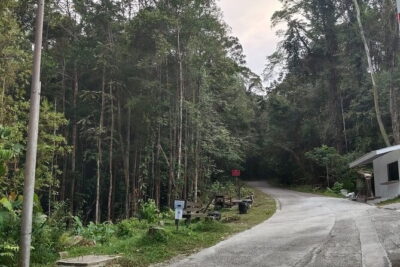
Once you’re in Kubah, you’ll spend about two hours on the ground with your guide. The route focuses on areas where frogs and other animals are likely to be near water.
You’ll move along trails and toward streams and ponds, guided by torches or lights. The point is not to rush. The point is to stop, scan, and look carefully. With head lamps or flash lights, you can illuminate small surfaces without burning your eyes out.
The rhythm tends to go like this:
- Walk slowly and scan for movement or shapes.
- Pause when you hear calls or when something catches the light.
- Look closely at what’s near water edges, not only the open trail.
- Listen again, because calls can lead you to where a frog is hiding.
That listening part matters. Frogs call to each other, and the rainforest soundtrack gives you clues. If you go in expecting only visual sightings, you can feel disappointed when you miss a frog. If you go in ready to use your ears too, you’re more likely to feel like you’re succeeding even when the camera moments are fewer.
What you can spot besides frogs, and what to do with those chances

Yes, it’s a frog safari. But the smartest way to enjoy this is to treat it as a nighttime rainforest safari where frogs are the headline act.
Based on real, specific sightings tied to guides including Danny, you may see:
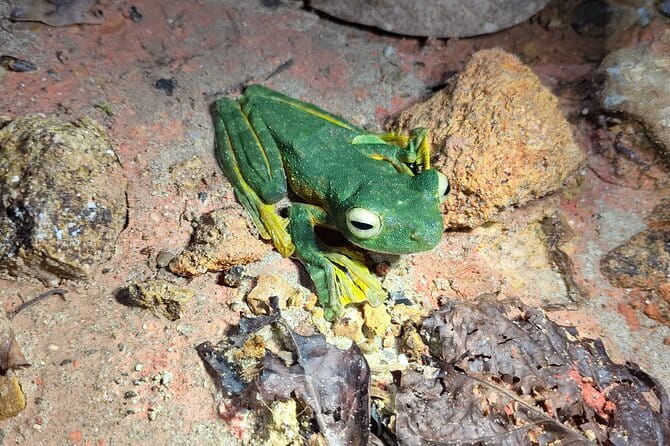
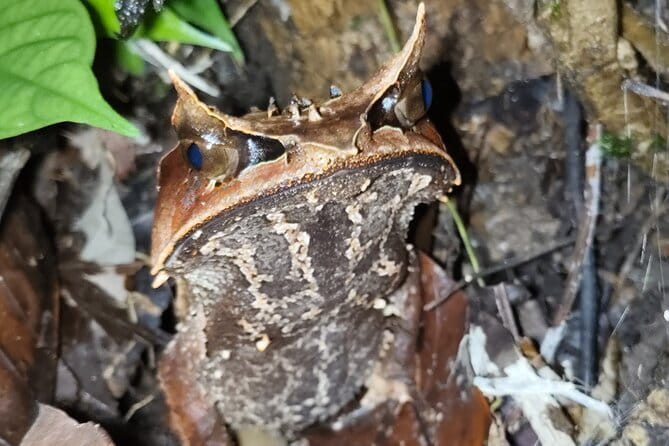
- Frogs and toads: People have reported around 10 types, 10+ species, and even 15 to 17 species during a single outing, including the Bornean long-nosed horned frog and Wallace’s flying frog (reported by name).
- Reptiles: Snakes have shown up, including a viper in at least one outing.
- Insects: Insects like a weevil have been reported.
- Spiders: Some impressive types have come up, including huntsman and scorpion-tailed orb weaver.
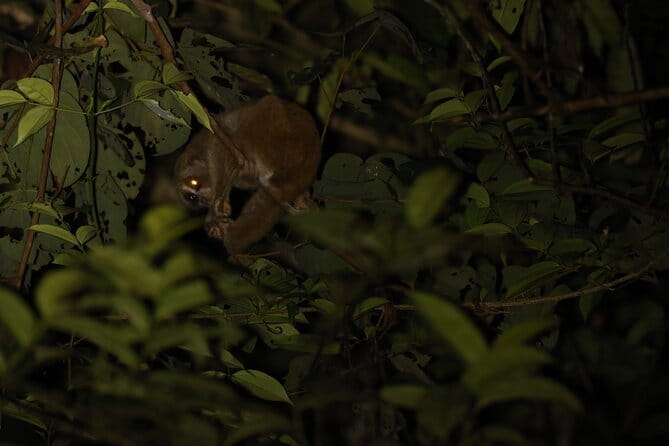
- More mammals than you expect: Small mammals have been spotted, including civets, a fruit bat, and a shrew.
- Lizards and other critters: Lizard species and general night jungle activity are part of the story too.
Here’s how to think about this so you don’t end up disappointed: even if you only see a few frogs, the night walk is still valuable if you’re spotting other rainforest life and learning how to read micro-habitats. Frogs often cluster near water, but nocturnal animals share the same rainforest network.
Also, remember the official note: wildlife is not guaranteed. That means you should plan your mindset around being outdoors, learning the night patterns, and enjoying the guided search, not treating the tour like a ticket to a specific animal checklist.
Danny’s role in making the rainforest feel visible
In the experiences tied to this safari, a guide named Danny shows up again and again in a very specific way: he finds frogs people can’t see until he points them out.
That kind of guide skill is a big deal for two reasons.
First, at night, you’re dealing with camouflage and tiny movements. Frogs might look like a knot of moss or a color patch until a trained eye catches the correct angle and timing. Danny’s reputation is essentially for spotting “the first frog your eyes would miss.”
Second, good spotting is also about patience. Guides do more than shine lights. They help you slow down and look where the animal actually is, near water edges, on surfaces that reflect light correctly, and in spots where calls suggest hidden activity.
If you’re the type of person who likes nature but hates feeling left behind, this is the best version of a guided night walk. Your guide does the hard work of interpreting what you’re seeing, which makes your own observation skills improve during the same outing.
What’s included versus what you bring: comfort for a sweaty night
This safari is practical. You’re not paying extra for basics that matter at night.
Included:
- Entrance fee to Kubah National Park
- Air-conditioned vehicle for transport
- Head lamps or flash lights
- Disposable raincoat
- In-person guide
Not included:
- Food or drinks
So you’ll want to be ready for the basics of a rainforest evening. Since food and drinks are not provided, plan to handle your own hydration and anything you need for energy. The tour runs late enough that skipping a meal earlier can hit hard.
Also consider the physical reality. This isn’t described as a marathon, but there is walking, and the park route can include uphill stretches to reach pond areas. One important note: it’s not recommended for travelers with knee problems or long walking issues. If that’s you, choose carefully and ask your provider whether your group can pace slower than average.
Good comfort choices help here because nighttime spotting often means stopping and standing in one spot for a while. Wear something you can move in and keep steady while you scan.
Price and value: is $75.69 worth it?
The listed price is $75.69 per person, and the typical booking pattern is about 12 days in advance.
So what makes it feel like decent value?
You are paying for:
- Access through the park entrance fee
- A guided search by someone practiced in night spotting
- Provided night gear: head lamps/flash lights
- Weather support: disposable raincoat
- Night transport in an air-conditioned vehicle
Those inclusions matter because a frog safari is mostly about the guide plus the night equipment. Without lights and guidance, you’d basically be guessing your way through dark trails and hoping for the best.
It’s also about what you’re buying emotionally. For $75.69, you’re buying time in a rainforest when it’s most active, plus the chance to see rare frogs and other animals in their real habitat. In the best cases, people have tallied a long list of frog species in just over two hours, which is exactly the kind of efficient, high-focus outing you want on a limited trip.
The tradeoff is also clear: since wildlife is not guaranteed, you should treat this as a guided night experience first, animal checklist second. If you’re okay with that, the pricing feels reasonable for what you get.
Who should book this frog safari, and who should skip it
This works especially well if you:
- Love nature walks but prefer guided wildlife searching over DIY
- Want to see Borneo rainforest life at night, not just during daylight
- Enjoy the small stuff, insects, spiders, and amphibians, not only big animals
- Are traveling with a group that wants a quieter, focused experience (this is set up as a private tour for your group)
You might want to skip or reconsider if:
- You have knee issues or any long-walking limitation, because the walk includes some uphill movement
- You need a guarantee of specific animals, since wildlife sightings are explicitly not assured
If you’re coming from Kuching and want an organized night plan that turns the rainforest into a living classroom, this is a strong choice.
Should you book Kubah’s Nocturnal Wonders night frog safari?
I’d book it if you can handle the uncertainty and you want a night rainforest experience that’s structured, not random. The combination of guided scanning, provided head lamps/flash lights, and a couple hours focused near water makes it a good bet for frog lovers and serious nature people.
If your trip schedule allows and you’re comfortable with some walking, go for it. If you’re injury-prone or mobility-limited, skip this one and look for an option that matches your pace and terrain needs.
One final tip for making the most of it: go in ready to listen as much as look. On a night frog safari, hearing the chorus is not a consolation prize. It’s part of how you track where the action is happening.
FAQ
Is hotel pickup available for this Kubah night frog safari?
Yes, pickup is offered, and the experience includes an air-conditioned vehicle for transport.
How long is the tour total?
The tour is about 4 hours total. You’ll spend about 2 hours inside Kubah National Park, with about 1 hour driving to the destination and about 1 hour driving back.
What time does the safari run?
It runs Monday through Sunday from 7:00 PM to 10:30 PM.
What’s included in the ticket price?
The ticket includes the Kubah National Park entrance fee, an air-conditioned vehicle, head lamps or flash lights, a disposable raincoat, and an in-person guide.
Are frogs and other wildlife guaranteed?
No. Spotting wildlife in the natural environment is never guaranteed.
Is food or drinks included?
No. Food and drinks are not included.
Is this tour suitable if I have knee problems or trouble walking?
It is not recommended for travelers with knee problems or long walking problems.
Can I cancel and get a full refund?
Free cancellation is available. You can cancel up to 24 hours in advance for a full refund, based on local time. If you cancel less than 24 hours before the start time, the amount paid is not refunded.
More Tour Reviews in Kuching
Sarawak, Further Afield
Other Kuching write-ups from our reviewers
- Kuching: Walking Tour with Sampan Boat Ride and Lunch
★ 5.0 · 3 reviews - Kuching Half Day City Tour
★ 5.0 · 4 reviews - Sarawak Sunset River Cruise with Return Transfer
★ 4.0 · 5 reviews - Traditional Bidayuh Village Bamboo Longhouse Tour
★ 3.5 · 6 reviews - Sarawak Cultural Village Tour
★ 4.5 · 6 reviews
More Kuching & Sarawak Tours.
 ★ 5.0Half-Day Heritage Bike Tour in KuchingFrom $63162 reviews
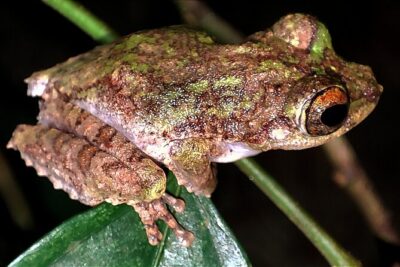 ★ 5.0Night Froggy Adventure at Kubah National ParkFrom $7571 reviews
 ★ 4.5Semenggoh Orangutan Centre from KuchingFrom $6653 reviews
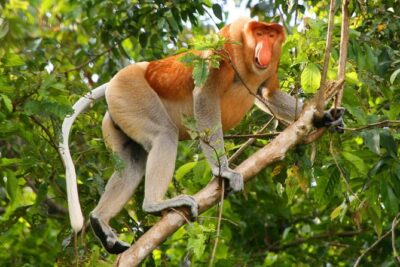 ★ 4.5Bako National Park from Kuching CityFrom $14035 reviews
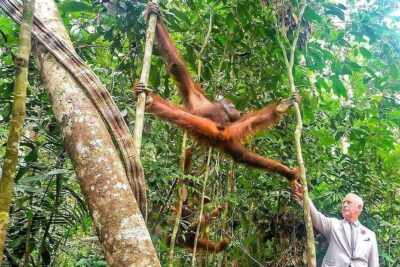 ★ 5.0Semenggoh Wildlife Centre Tour: Discover Sarawak’s OrangutansFrom $7034 reviews
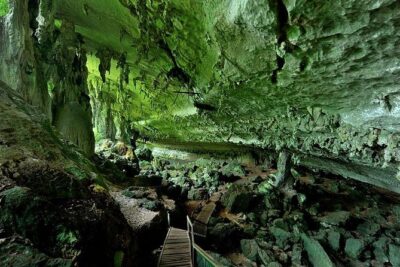 ★ 4.0Historical Niah National Park Day Trip from MiriFrom $9027 reviews
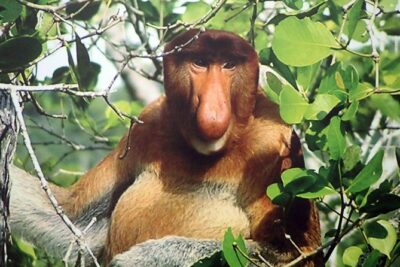 ★ 4.5Bako National ParkFrom $15818 reviews
 ★ 5.0Night Frogs Tour at Kubah National ParkFrom $11417 reviews
Other Malaysia lists with this tour