
REVIEW · KUALA LUMPUR TOURS & DAY TRIPS
Kuala Lumpur Heritage 4-Hour Walking Tour
A city can teach you its cultures in just a few blocks. This 4-hour heritage walk moves you through Central Market, Chinatown, and temple time, with a local guide keeping it practical and human. You also get food tastings built into the route, so the history sticks in your stomach as well as your head.
I especially love how the tour connects food tastings to the different communities in Kuala Lumpur, not just the scenery. I also like the temple visits, especially Sin Sze Si Ya Temple and Sri Mahamariamman Temple, where your guide explains what you are seeing and how to be respectful.
One thing to consider: this is a moderate walking tour. If your legs are not happy with steady city walking, you may want to pace yourself and bring comfy shoes.
In This Review
- Key takeaways before you go
- Walking Kuala Lumpur’s culture, without wasting your day
- Meeting at Tourist Information and Interaction Center, near Kasturi Walk
- Central Market and Kasturi Walk: the start of the heritage trail
- Chinatown and the food lesson that changes how you see the streets
- Temple time: Sin Sze Si Ya and Sri Mahamariamman
- Food tastings, Malay flavors, and learning by eating
- Group size, pace, and who will enjoy it most
- Price and value: $60 for 4 hours plus food and context
- Ending at Masjid Jamek LRT, and how to finish your day
- Should you book this Kuala Lumpur Heritage 4-hour Walking Tour?
- FAQ
- Where does the tour start?
- What is the tour duration?
- How much does the tour cost?
- How many people are in each group?
- Is the tour guide available in English?
- What temples are included?
- Does the tour include food?
- Is there a minimum age requirement?
- How much walking is involved?
- Where does the tour end?
Key takeaways before you go
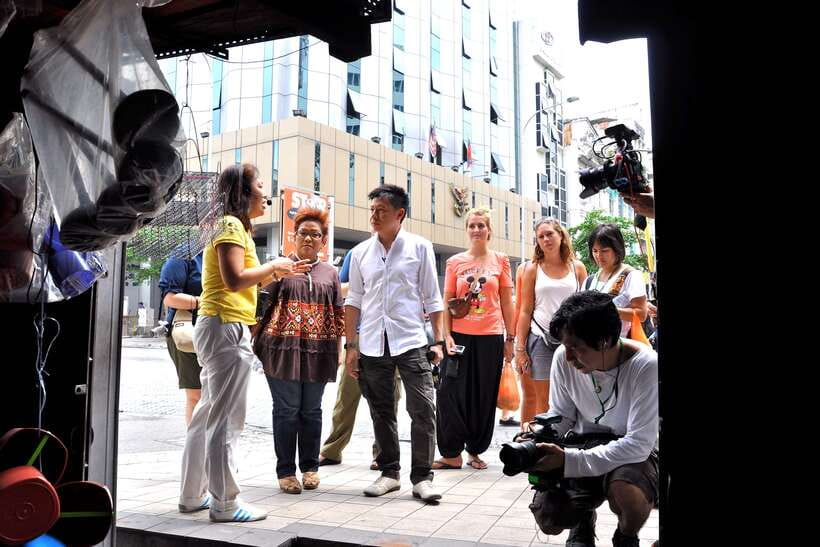
- Central Market start, easy to orient you fast in the historic core
- Small group (up to 8) for more Q and real interaction
- Food tastings are part of the lesson, not just a snack break
- Chinatown plus two temple stops gives you contrasting cultural viewpoints
- End at Masjid Jamek LRT station, handy for continuing your day
More of KL, from half day loops to full days out of the city
- Kuala Lumpur: Batu Caves Half-Day Tour with Pick-Up Option★ 4.5 · 4,288 reviews
- Private Half-Day Batu Caves and Cutural Tour in Kuala Lumpur★ 5.0 · 3,107 reviews
- Kuala Lumpur: Sambal Street Food Tour with 15+ Tastings★ 4.9 · 1,657 reviews
- From Kuala Lumpur: Cameron Highlands Day Tour with Lunch★ 4.3 · 1,178 reviews
Walking Kuala Lumpur’s culture, without wasting your day
This tour is built for people who like learning by moving. In four hours, you see the central texture of Kuala Lumpur, where Malay, Chinese, and Indian traditions show up side by side. It is not a museum day. It is street-level. You walk. You look up. You eat. Then you walk some more.
I like that the pace has built-in rhythm: walk time, short photo or break stops, and then guided explanation when it matters. That makes it easier to stay present, even when the area is crowded or the streets feel busy. Your guide also does safety guidance at the start, which helps you relax faster when you are stepping off curb after curb.
You will also feel the tour’s practical side. It starts at a known location near Central Market and ends at an LRT station your guide can point you toward your hotel from. That is a real advantage in Kuala Lumpur, where the best plan often is to combine walking with quick transit.
Meeting at Tourist Information and Interaction Center, near Kasturi Walk
The meeting point is the Tourist Information and Interaction Center. It is close to Central Market, but the local walk-in routing can be a little tricky if you are looking for signage instead of directions.
Here is the route that works, based on the written instructions:
- Walk along Kasturi Walk next to Central Market (CM).
- Exit the walkway into an alleyway between Central Market and the purple building.
- Walk into ART LANE.
- Go about 30 seconds down the lane to the black staircase.
- Go up the stairs, then turn right.
- There is a mini garden, and the center is next door. The interior is turquoise.
Two practical tips help. First, arrive a few minutes early so you can calmly check the alleyway entrance. Second, if you are prone to sprinting when you are late, don’t. One guide in a past group had initial trouble finding the meeting point, and the fix was simply getting clear on the approach.
Central Market and Kasturi Walk: the start of the heritage trail
Central Market is a strong place to begin because it anchors you in the historic heart of Kuala Lumpur. You get oriented quickly, then you shift into the covered lanes around Kasturi Walk. This is where the tour becomes more than a quick photo loop.
Expect a guided walk through stall areas, including the covered flea market section on Kasturi Walk. Your guide’s job is not only to point out what is there, but to explain what those early Chinese and Indian settlers brought into the city center and how that influence shows up in everyday life.
This is also where you start learning how to read the neighborhood. What looks like ordinary street commerce is actually part of the city’s cultural habits. People bargain. People snack. People meet. If you have ever wondered how a “market” becomes a social space, this is a good first stop to notice that pattern.
You will likely get a short break or photo stop during the earlier part of the walk. That small pause matters because the best walking tours do not just rush you from one place to the next. They pace your attention so you can absorb what you came for.
Chinatown and the food lesson that changes how you see the streets
After the market lanes, the route shifts toward Chinatown. Chinatown is where Kuala Lumpur’s Chinese heritage becomes very visible in street life, shops, and religious spaces. Your guide frames it with stories about early settlement, then turns the walk into something you can experience with your senses.
This is also where the food tastings start to feel like the main event, in a good way. The tour includes authentic food sampling from different ethnic groups, and your guide helps you choose what you will be comfortable trying.
One review highlighted how helpful guides can be about risk-free curiosity. With guidance, people were able to try foods and even get comfortable with religious rituals they might skip on their own. That matters here, because if you are trying new foods in a foreign language environment, confidence beats guesswork.
Another practical point from the experience stories: do not overeat before the tour. One guide recommendation was clear that there are multiple eating moments along the route. If you have a big hotel breakfast, you may end up sipping water instead of enjoying the full tasting plan. Arrive hungry, not empty.
On foot instead, a few we walked


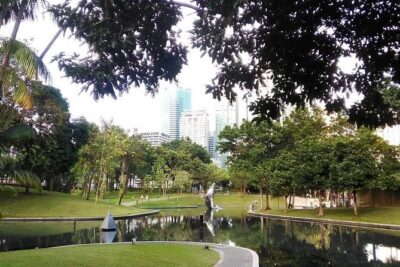
Temple time: Sin Sze Si Ya and Sri Mahamariamman
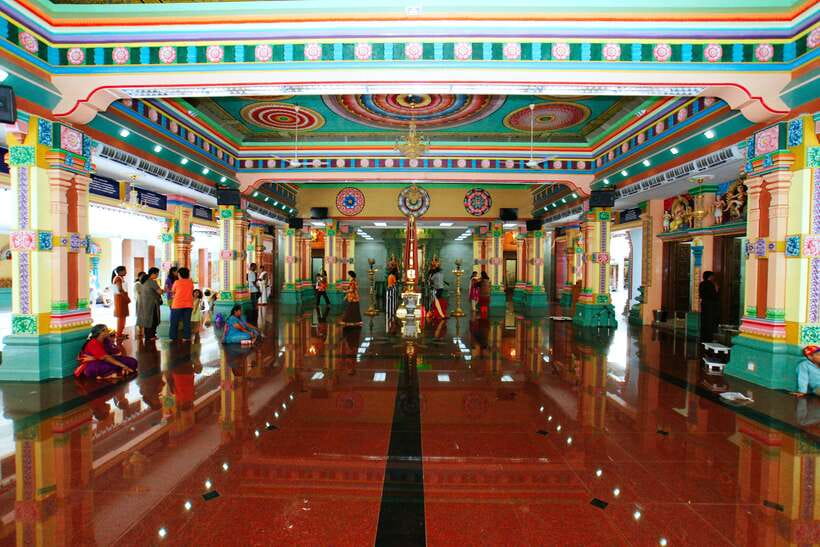
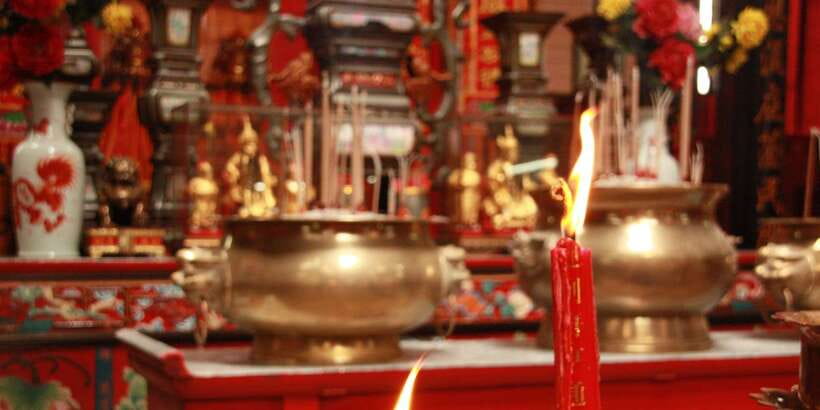
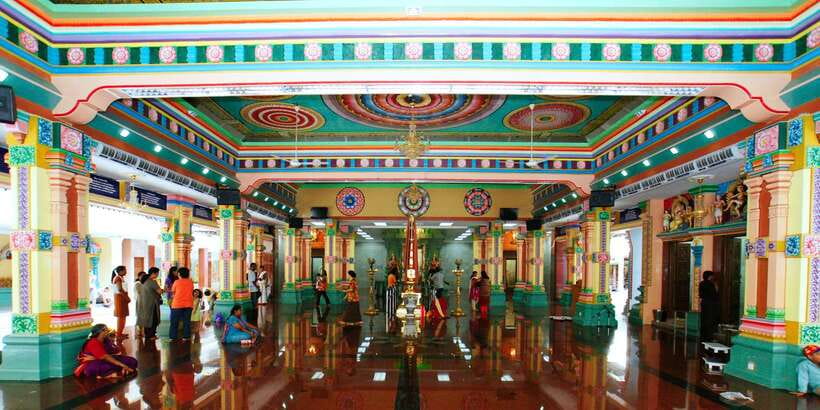
The temples are the dramatic center of this tour. You visit Sin Sze Si Ya Temple and Sri Mahamariamman Temple, and the guide explains the customs so you understand what you are seeing instead of just snapping photos.
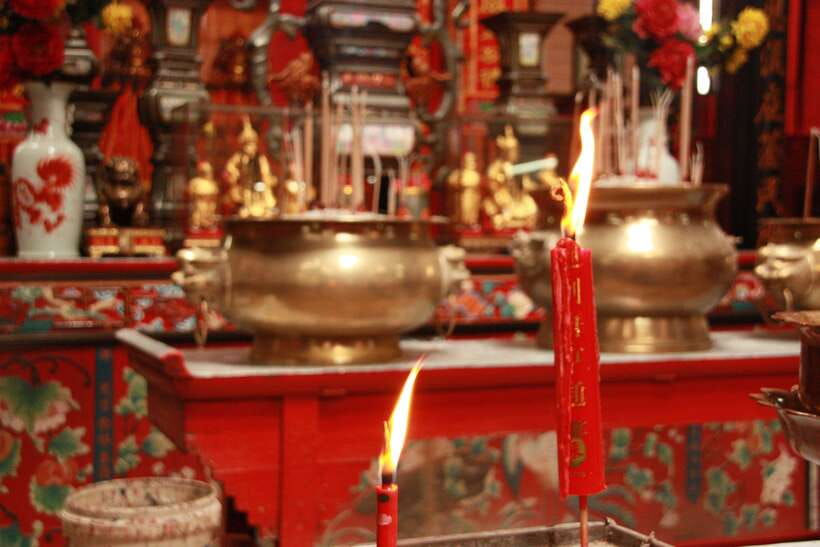
At Sin Sze Si Ya, you may notice people performing small, meaningful actions for luck or guidance. One guide story described the experience of being guided through ritual materials and understanding what people were doing for fortune. The takeaway for you is simple: ask questions early, watch how others participate, and follow your guide’s cues. If you get nervous, it is normal. Good guides are there to help you do the respectful version, not the confusing version.
Then you shift to Sri Mahamariamman Temple, where the focus feels different, more tied to Indian religious practice and everyday devotion. One previous group specifically mentioned a guide providing items like jasmine bracelets before the visit, plus clear instructions for participating appropriately. Another guide helped people with concrete ritual steps, including what to purchase and what the purpose is meant to be.
You should know the tour includes a safety briefing. Temples are active places. People move. Objects and offerings can be close together. Your guide’s guidance keeps you from wandering into spaces you should not be in.
Most important, the guide is not treating temples like background scenery. You are learning what the visits mean and how to behave, which is the difference between watching and understanding.
Food tastings, Malay flavors, and learning by eating
The tour includes food tastings plus bottled water. That might sound like a standard package, but it is actually a strong value move for Kuala Lumpur. Food is the easiest way to understand cultural overlap because the ingredients and habits travel across communities.
You will sample Malay foods as well as food from other ethnic traditions featured during the walk. Your guide also adapts tastings based on what you already like or what you have not tried before, at least in practice with guides who are described as flexible and responsive.
One guide story included detailed help with eating techniques, like how to handle a banana leaf style meal. Another described how the guide patiently paced the experience and explained what each item was and why it fit into cultural routines.
Here is the smart way to approach the tastings if you want the best experience:
- Tell your guide your food limits at the start.
- Go for small bites first, then decide if you want more.
- If something seems intimidating, ask what it is and how it is typically eaten.
And remember, tastings are part of the timing. You are not doing a separate lunch. You are eating multiple small portions while your guide moves you between meaningful stops. That is why starting hungry helps.
Group size, pace, and who will enjoy it most
This is a small group tour limited to 8 participants. That size is big enough to feel like a group, but small enough for a guide to answer your questions without shouting. It also makes it easier for everyone to stay together around tighter temple areas and market stalls.
The pacing is described as a moderate walking route. That is the key consideration. Four hours sounds short, but in city centers, you are on your feet for most of it. If you are visiting with mobility limits or you hate long stretches of sidewalk time, this may not be your best pick.
The tour is live in English, and the minimum age is 11. So it can work well for older teens and adults who want a guided, structured introduction to Kuala Lumpur’s mix of cultures.
Based on how guides are described, you will probably enjoy this tour most if you like:
- learning through real places, not just a bus ride,
- trying food you might otherwise skip,
- asking questions about customs at temples.
One review also mentioned the tour ran about an hour longer than expected. That is not guaranteed, but it does match the reality that when you do tastings and ritual explanations, time can stretch. I would treat the 4-hour duration as a target, not an exact clock.
Price and value: $60 for 4 hours plus food and context
At $60 per person for a 4-hour walking tour, the value depends on what you would otherwise spend. In this case, your guide, bottled water, food tastings, and goods and services tax are included. Those inclusions matter because street food alone can add up quickly in Kuala Lumpur, and a guided explanation is what turns food into understanding.
If you were to do this on your own, you would still need to:
- pay for snacks,
- spend time figuring out which temples are worth a careful visit,
- navigate meeting points in a crowded area,
- and figure out what is appropriate at religious sites.
Here, a good guide removes that friction. Past groups praised guides such as Luis, Kristin, Lewis, Farah, and Christie for exactly that blend: lots of explanation, patient pacing, and thoughtful help with food choices and temple customs. Not every guide will match that style perfectly, but the pattern is consistent.
Also, the small group limit is part of the cost logic. More individualized attention costs money. If you want a more personal experience than a large group tour, this price is positioned for that.
Ending at Masjid Jamek LRT, and how to finish your day
The tour ends at Masjid Jamek LRT station. That matters because it gives you an easy next step. Instead of finishing in the middle of nowhere, you end at a major transit point where you can continue exploring by train or make a straightforward plan for the rest of your day.
Your guide can also point you toward the direction of your hotel from there. That is a small thing, but it is the kind of practical help that makes the whole half-day feel less stressful.
If you want to keep the momentum, this ending spot works well because Masjid Jamek is surrounded by plenty of ways to continue walking or take transport. The key is to keep your energy for that final leg. Temple time plus tastings can make you tired in a good way. Save your biggest wandering for right after you regroup at the station.
Should you book this Kuala Lumpur Heritage 4-hour Walking Tour?
Book it if you want a compact introduction to Kuala Lumpur that mixes Central Market, Chinatown, and two major temples, with food tastings built into the route. You will get the most out of it if you enjoy walking city blocks, you like learning customs, and you are willing to try foods with help.
Skip it or choose a gentler plan if you do not handle moderate walking well, or if you prefer independent travel where you set every pace yourself. Also, if you are extremely sensitive to finding meeting points in dense areas, arrive early and use the provided Kasturi Walk route so you do not start the day frazzled.
If you like the idea of eating your way through the city’s multicultural side and understanding what you are seeing at temples, this is a solid, good-value way to spend four hours in Kuala Lumpur.
FAQ
Where does the tour start?
The meeting point is the Tourist Information and Interaction Center. Walk along Kasturi Walk next to Central Market, exit into an alleyway between Central Market and the purple building, go into ART LANE, take the black staircase up, and turn right. The center is next door to a mini garden, with a turquoise interior.
What is the tour duration?
The tour lasts 4 hours, with availability depending on starting times.
How much does the tour cost?
The price is $60 per person.
How many people are in each group?
It is a small group limited to 8 participants.
Is the tour guide available in English?
Yes. The tour includes a live guide in English.
What temples are included?
You will visit Sin Sze Si Ya Temple and Sri Mahamariamman Temple.
Does the tour include food?
Yes. The tour includes food tastings, plus bottled water.
Is there a minimum age requirement?
Yes. The minimum age permitted is 11 years old.
How much walking is involved?
The tour involves a moderate amount of walking.
Where does the tour end?
The tour ends at Masjid Jamek LRT station, and your guide can point you in the direction of your hotel.
More Tours in Kuala Lumpur
More Tour Reviews in Kuala Lumpur
KL, Three More Ways
Other Kuala Lumpur write-ups from our reviewers
- Sky Mirror Experience at Kuala Selangor from Kuala Lumpur
★ 4.5 · 3 reviews - Putrajaya Tour From Kuala Lumpur
★ 4.0 · 3 reviews - Private Batu Caves & Petronas Twin Tower Tickets With Lunch *26*
★ 5.0 · 3 reviews - Private Night Tour: Petronas Twin Tower And Shopping
★ 5.0 · 3 reviews - Marina Jetty Pangkor Laut or Lumut Jetty Transfer from Kuala Lumpur
★ 5.0 · 3 reviews
More Kuala Lumpur Tours & Day Trips.
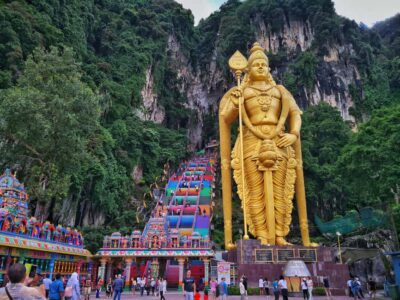 ★ 4.5Batu Caves Half-Day Tour with Pick-Up OptionFrom $134,288 reviews
 ★ 5.0Private Half-Day Batu Caves and Cutural Tour in Kuala LumpurFrom $353,107 reviews
 ★ 4.4Historical Melaka Day Tour with LunchFrom $422,297 reviews
 ★ 4.9Sambal Street Food Tour with 15+ TastingsFrom $531,657 reviews
 ★ 4.7Batu Caves Cultural Temple TourFrom $341,453 reviews
 ★ 4.6Petronas Twin Towers Entry E-TicketFrom $331,229 reviews
 ★ 4.3Cameron Highlands Day Tour with LunchFrom $951,178 reviews
 ★ 4.6Genting Highlands & Batu Caves Day TripFrom $371,045 reviews
Other Malaysia lists with this tour