
REVIEW · KUALA LUMPUR TOURS & DAY TRIPS
Kuala Lumpur Colonial History Walk – Private Guided Tour
Colonial Kuala Lumpur looks different when you walk it. This private guided stroll turns a compact city-center area into a moving lesson, with stop-by-stop context and local color. You get to see the empires, the institutions, and the street-level clues that explain how this city grew.
What I like most is the storytelling guide approach. You are not stuck with a read-off-a-map routine, you are getting connected explanations at places like the KL Railway Station and the government buildings around Independence Square. Second, I love that so many stops are listed with free admission tickets, which keeps the experience feeling like value, not a money parade.
One thing to consider is the pace. It is a 3 to 4 hour walking tour with a moderate physical fitness level, so if you want lots of long sits and slow museum time, bring backup plans or choose a lighter day in KL.
In This Review
- Key things you will notice on this KL walk
- Kuala Lumpur Railway Station and the FMS rail administration buildings
- Old Market Square clock tower built for 1937
- Jamek Mosque and the geography lesson at the confluence
- Sultan Abdul Samad Building and St. Mary’s Cathedral in one civic sweep
- Selangor Club padang, the Kuala Lumpur Library, and former government printing
- 2, Jln Ampang and the bank building story that signals global links
- Queen Victoria Fountain and what happens when objects travel
- Old FMS Railway Office and the shift from separate rail systems
- Central Market Kuala Lumpur, Kapitan Yap Ah Loy, and the trade story you can walk through
- How long this really takes, and how to prepare
- Price, what you get for $45, and whether it is good value
- Who this private colonial history walk suits best
- Should you book this KL colonial history walk?
- FAQ
- How long is the Kuala Lumpur Colonial History Walk?
- Where does the tour start and end?
- What is the price per person?
- Is the tour private?
- What is included in the tour price?
- Are drinks or meals included?
- What is the cancellation policy?
Key things you will notice on this KL walk

- A rail-first route that starts at Kuala Lumpur Railway Station and follows the British-era infrastructure story
- Landmarks tied to dates and designers, like Arthur Benison Hubback and a clock tower built for King George VI’s coronation
- A big civic cluster in a small area, from Jamek Mosque to Sultan Abdul Samad Building and St. Mary’s Cathedral
- Trade and finance on foot, including the Central Market origin story and a bank building at 2, Jln Ampang
- River context through the Klang River details, so the geography makes sense as you move
More of KL, from half day loops to full days out of the city
- Kuala Lumpur: Batu Caves Half-Day Tour with Pick-Up Option★ 4.5 · 4,288 reviews
- Private Half-Day Batu Caves and Cutural Tour in Kuala Lumpur★ 5.0 · 3,107 reviews
- Kuala Lumpur: Sambal Street Food Tour with 15+ Tastings★ 4.9 · 1,657 reviews
- From Kuala Lumpur: Cameron Highlands Day Tour with Lunch★ 4.3 · 1,178 reviews
Kuala Lumpur Railway Station and the FMS rail administration buildings
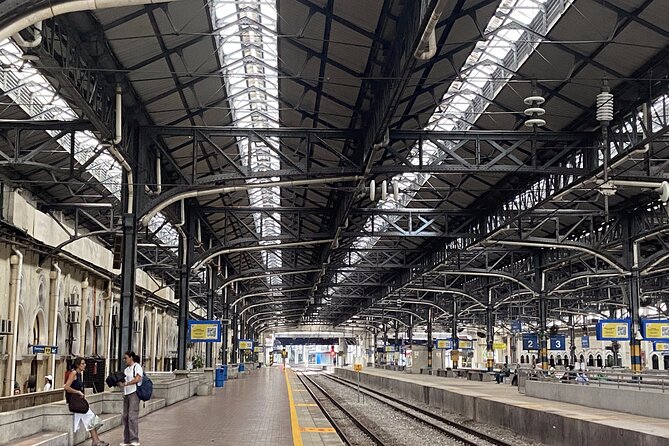
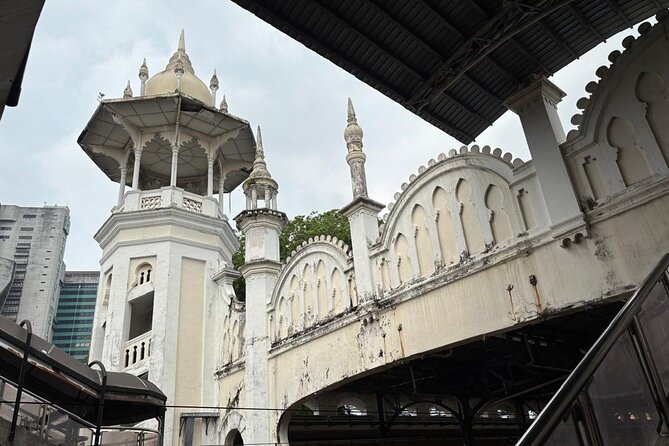
The tour starts at Kuala Lumpur Railway Station, right at 110 Jalan Sultan Hishamuddin. Even before you learn the names, the building gives you a clue: domes and minarets, white and crisp, a kind of architectural stage set that tells you this was meant to impress travelers.
I like how the route sets your brain to the right mode from minute one. The guide frames the station not as a standalone photo spot, but as part of a bigger British-era rail plan. You then cross to the Malayan Railway Administration Building, also designed by Government Architect Arthur Benison Hubback. Construction began in 1914, which helps you place this architecture in time, not just in style.
If you have ever wondered why KL feels like it can change “era” without leaving one neighborhood, this first segment is the answer. The rail sites act like anchors, and suddenly the rest of the route reads like a timeline you can walk.
Practical tip: expect this to be a great start for orientation. You will be close to your first photo opportunities, and the walk is organized so you are not zigzagging all over the city before you even get going.
Old Market Square clock tower built for 1937
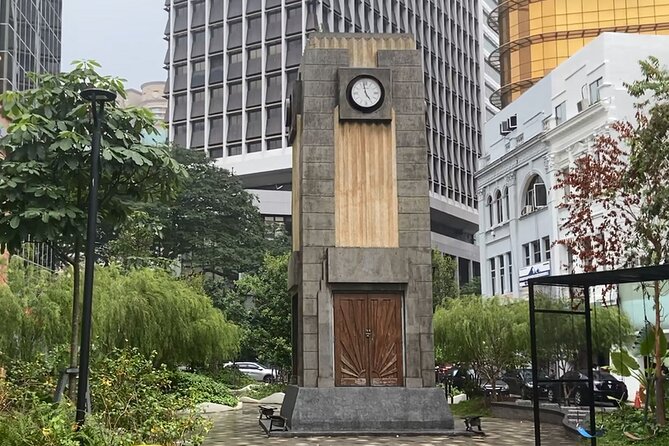
From the station area, the walk moves into the Old Market Square zone, where the Old Market Square Clock Tower is the focal point. The detail I find useful here is the reason for the tower: it was erected in 1937 to mark the coronation of His Majesty King George VI.
This is one of those stops where the guide’s storytelling matters. A clock tower can feel like a random pretty object, but tied to a specific political moment, it becomes a clue about what the colonial administration wanted to signal publicly, and when.
The upside is that you get a quick win. This is a short stop, but it adds context that pays off later, especially when you see other buildings around civic squares and institutions that were built to communicate authority.
Jamek Mosque and the geography lesson at the confluence
Next comes Jamek Mosque, and the key idea is location. The mosque is described as sitting at the birthplace of Kuala Lumpur, where the Klang and Gombak rivers meet. That confluence is connected directly to the city name, so the guide is not just giving you a landmark, they are giving you the city’s origin story in one practical geography moment.
I like this stop because it corrects a common travel mistake. Many visitors treat KL’s river story as background noise. Here, it is the main point, and it helps you understand why the colonial civic core ended up where it did.
In terms of how long you will linger, it is typically a comfortable pause, not a long ceremony-style visit. Still, it is a religious site, so keep your behavior respectful and expect quiet, observation-style time.
Sultan Abdul Samad Building and St. Mary’s Cathedral in one civic sweep
The route then hits the Sultan Abdul Samad Building, a government complex constructed in 1894 for the British colonial administration. It sits in a cluster with the former General Post Office, Magistrate Courts, and the Kuala Lumpur Council Building, so you can see how the colonial government tried to place power in a clear, walkable center.
If you like architecture with paperwork attached, this is your stop. The tour frames these buildings with dates and purpose, like how the colonial administration used civic spaces to project order.
Just a short time later, you reach St. Mary’s Cathedral, the Anglican Church of St Mary the Virgin. The details matter: it started as a timber church in 1887 on nearby Bukit Aman hill, then the present brick structure was built in 1895. That transition gives you a clear sense of how institutions grew from modest beginnings into permanent structures.
One caution: this is a popular area, and you may share sidewalks with other pedestrians taking photos. Still, the guide’s job here is to keep you from getting stuck only in “pretty building mode.” You should come away understanding what these institutions represented.
On foot instead, a few we walked


Selangor Club padang, the Kuala Lumpur Library, and former government printing
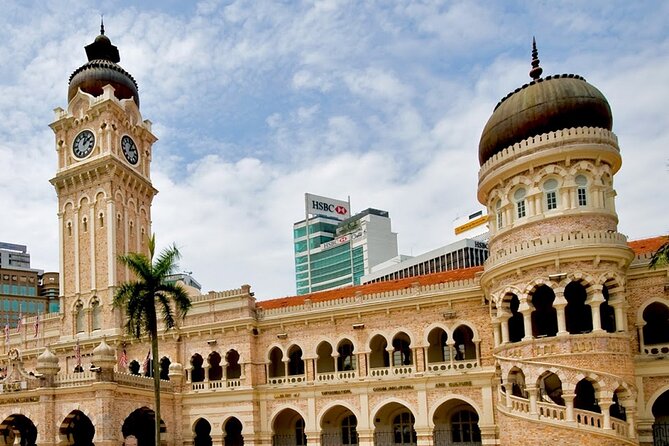
After the big civic icons, the walk shifts into the spaces of education, publishing, and elite social life. The Selangor Club, founded in 1884, is part of this segment. The tour description explains that it served as a meeting place for educated and high-ranking members of British colonial society, with admission based more on education than nationality.
Then you move toward the Kuala Lumpur Library, specifically pointing out the former Government Printing Office building on the library grounds. Completed in 1899, it was where government reports and official books, including notifi cations, were produced.
This combination works well because it gives you two angles on the same system. One place is about who gathered and held influence, the other is about who produced official information. When you connect those dots, KL’s colonial story feels less like random old architecture and more like how the administration ran day to day.
2, Jln Ampang and the bank building story that signals global links
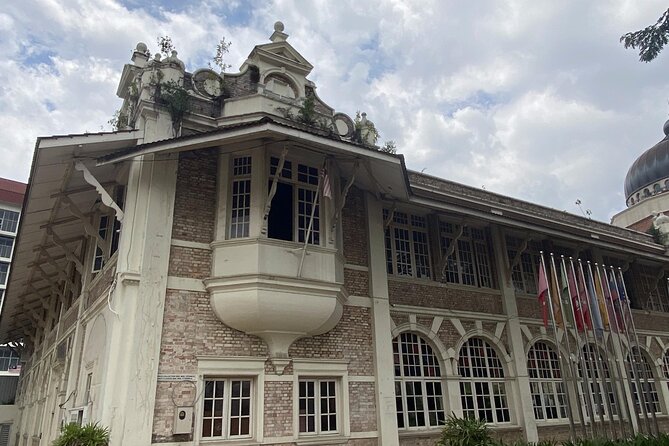
Next up is 2, Jln Ampang, a building completed in 1909 on the south side of Independence Square. The description notes it housed the main branch of the Chartered Bank of India, Australia and China, later becoming Standard Chartered.
This stop is a reminder that colonial influence was not only about government offices and churches. It was also about capital flow and trade systems, and the guide helps you see the bank building as infrastructure for commerce, not just a pretty façade.
If you are into economic history, this is a great moment. It makes the rest of the route feel connected, especially when you reach Central Market later.
Queen Victoria Fountain and what happens when objects travel
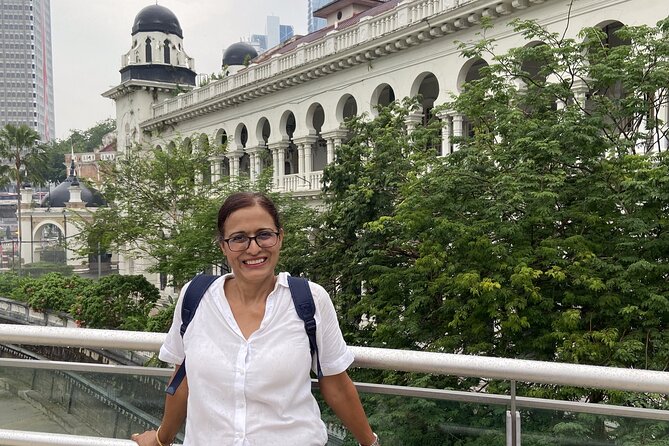
The Queen Victoria Fountain is positioned on the corner of the Selangor Club Padang. It was shipped from Britain to Malaya to commemorate Queen Victoria’s diamond jubilee in 1897.
Here is the type of detail that makes the tour fun, and useful. The description points out an irony: it was not assembled on site until later. That small twist gets you thinking about the practical reality behind colonial symbolism. Things arrived by ship, schedules slipped, and even big symbolic objects had to wait for logistics.
It is a shorter stop, but it is the kind of story you remember later when you see other monuments in KL and wonder how they got there.
Old FMS Railway Office and the shift from separate rail systems
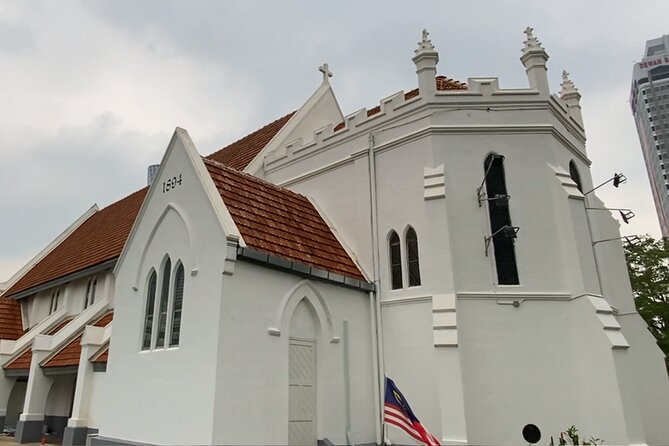
Another rail-related highlight follows at the Old FMS Railway Office. This building is described as the first headquarters of the Federated Malay States Railways (FMSR), marking the shift from fragmented state railways to one unified system.
This is the tour doing what it should do at every step: using one building to explain a bigger structural change. By now, you have the rail story in your head from the station and administration office. This stop gives you the “then what” phase, where the British system reorganizes itself and scales up.
If you are the type who likes your travel to leave you with a clear mental map, this helps. It is not only about seeing old architecture. It is about understanding why certain buildings exist.
Central Market Kuala Lumpur, Kapitan Yap Ah Loy, and the trade story you can walk through
The final major stop is Central Market Kuala Lumpur, and it is a satisfying place to end. The tour description traces the idea back to Kapitan Yap Ah Loy, who conceived the area as a humble wet market in 1888. Over time, it became a splendid hall of commerce.
Even if you do not care about markets as a subject, it is a smart way to end a colonial history walk because it shifts you from government to everyday economic life. Colonial rule was not only decrees and cathedrals. It was also goods moving, food buying, and money changing hands.
The tour ends at Central Market, and the guide plan is built to keep you moving easily after the walk. From there, it is a short walk to public transport, which means you are not stuck guessing how to get back to your hotel.
Practical tip: plan a little time after the tour for browsing. Since the tour is focused on history, a casual wander through the market area helps you connect what you heard with what you see now.
How long this really takes, and how to prepare
The tour runs about 3 to 4 hours, and it is a walking tour. You should have a moderate physical fitness level. That usually means you can keep a steady walking pace for most of the time, with short pauses at each stop.
Because meals and bottled water are not included, I recommend you bring a bottle and a small snack if your day needs it. KL weather can be warm, and even with shade around civic buildings, you will feel better with water in hand.
Also note that it is described as near public transportation. That matters because you can plan your day with less stress. You can take transit to the start near the KL Railway Station, do the walk, and then head back without turning it into an all-day logistics project.
Price, what you get for $45, and whether it is good value
At $45.00 per person, this tour sits in the mid-range for a private guided walking experience. The value gets better when you look at what is actually included.
You get:
- a 3 to 4 hour private walking tour
- printed material
- a personalised experience for up to 4 guests
- listed stops with admission ticket free
- mobile ticket
The “up to 4 guests” detail is important. If you are traveling as a small group, you can split the guide cost, and the tour stays private. That is a real advantage over larger group tours where you spend more time trying to hear the guide than listening to them.
One practical note: it is also listed as having group discounts. If you are booking with friends or family, ask how the provider handles discounts for group size.
Who this private colonial history walk suits best
This tour is a strong fit if you like:
- architecture with dates and designers attached
- a clear route through the colonial core without long detours
- a guide who can explain why buildings were built, not only what they look like
It is also a good option if you want a flexible, personalized feel. Since it is private and limited to your group, the guide can adjust the pacing and focus based on what you care about most.
If you are traveling solo, it can still work well because you will likely get more attention than you would on a large group tour. Just be ready for a steady walking rhythm.
Should you book this KL colonial history walk?
Book it if you want a focused, walkable way to understand colonial Kuala Lumpur. The route is built around meaningful structures, and the guide storytelling angle is the difference between a checklist of photos and a story you can remember.
Skip it, or pick a shorter or more flexible option, if you hate walking for hours or you prefer pure museum-style time. This is designed for street-level context, not long indoor stops.
Finally, if you like to plan ahead, this one is typically booked about 30 days in advance on average. If your dates are fixed, I would not wait until the last minute.
FAQ
How long is the Kuala Lumpur Colonial History Walk?
It lasts about 3 to 4 hours.
Where does the tour start and end?
It starts at Kuala Lumpur Railway Station, 110 Jalan Sultan Hishamuddin, Kampung Attap, 50000 Kuala Lumpur. It ends at Central Market Kuala Lumpur, 50050 Kuala Lumpur City Centre.
What is the price per person?
The price is $45.00 per person.
Is the tour private?
Yes. It is a private tour/activity, and only your group participates. The experience is personalized for up to 4 guests.
What is included in the tour price?
Included are the admission fee, printed material, and a 3 to 4 hour private walking tour of Kuala Lumpur colonial landmarks.
Are drinks or meals included?
No. Bottled water and meals are not included.
What is the cancellation policy?
Free cancellation is available up to 24 hours in advance of the start time for a full refund. If you cancel less than 24 hours before, the amount paid is not refunded.
More Tours in Kuala Lumpur
More Tour Reviews in Kuala Lumpur
KL, Three More Ways
Other Kuala Lumpur write-ups from our reviewers
- Sky Mirror Experience at Kuala Selangor from Kuala Lumpur
★ 4.5 · 3 reviews - Putrajaya Tour From Kuala Lumpur
★ 4.0 · 3 reviews - Private Batu Caves & Petronas Twin Tower Tickets With Lunch *26*
★ 5.0 · 3 reviews - Private Night Tour: Petronas Twin Tower And Shopping
★ 5.0 · 3 reviews - Marina Jetty Pangkor Laut or Lumut Jetty Transfer from Kuala Lumpur
★ 5.0 · 3 reviews
More Kuala Lumpur Tours & Day Trips.
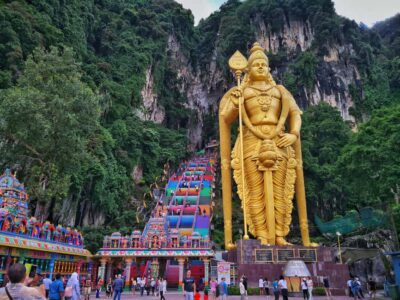 ★ 4.5Batu Caves Half-Day Tour with Pick-Up OptionFrom $134,288 reviews
 ★ 5.0Private Half-Day Batu Caves and Cutural Tour in Kuala LumpurFrom $353,107 reviews
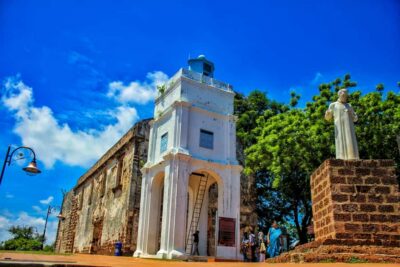 ★ 4.4Historical Melaka Day Tour with LunchFrom $422,297 reviews
 ★ 4.9Sambal Street Food Tour with 15+ TastingsFrom $531,657 reviews
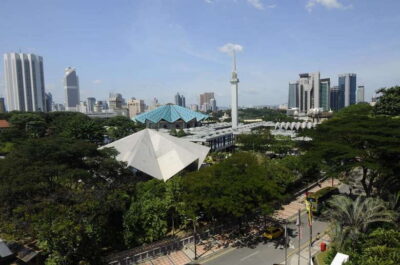 ★ 4.7Batu Caves Cultural Temple TourFrom $341,453 reviews
 ★ 4.6Petronas Twin Towers Entry E-TicketFrom $331,229 reviews
 ★ 4.3Cameron Highlands Day Tour with LunchFrom $951,178 reviews
 ★ 4.6Genting Highlands & Batu Caves Day TripFrom $371,045 reviews
Other Malaysia lists with this tour