
REVIEW · MALACCA HERITAGE DAY TRIPS
Full-Day Malacca City Tour
Malacca is an old port city with layers. This full-day trip from Kuala Lumpur strings together Dutch Red Square sights, Portuguese and Anglican churches, and the best-known multicultural corners of Melaka, all with hotel pickup and drop-off. You’ll spend 7 to 8 hours bouncing between historic stops, with an English-speaking driver handling the road map and timing.
I like that the tour keeps things simple and efficient: hotel pickup, an air-conditioned ride, and clear stops that cover major sites. I also like the mix of religious and colonial landmarks, because you get a clearer sense of how Malacca changed hands over time. One thing to consider, though, is that this is not a deep guided tour at every stop, and it may involve walking in heat.
In This Review
- Key things to know before you go
- Full-day Malacca value: what $55 actually buys
- Stadthuys and the Red Square: the Dutch heart of Melaka
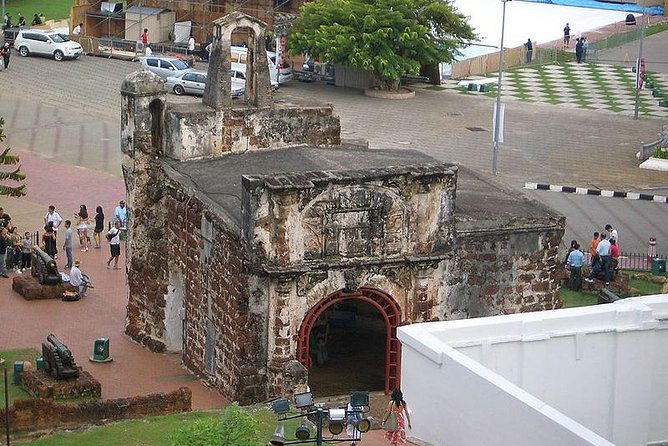
- A Famosa and Porta de Santiago: Portugal’s fortress, reduced to a gate
- St Paul’s Hill and Christ Church: how empires reshaped churches
- Jonker Street and the Peranakan pulse: shopping with historical weight
- Mini Malaysia and ASEAN Cultural Park: the quick overview stop
- Cheng Hoon Teng and Kampung Kling Mosque: faiths built side by side
- Malacca River revitalization and the Straits Mosque finale
- Food, heat, and how to keep the day comfortable
- Who should book this Malacca day trip, and who should choose a different format
- Should you book this Full-Day Malacca City Tour?
- FAQ
- How long is the Full-Day Malacca City Tour?
- What is included in the price?
- Is lunch included?
- What stops will I visit during the day?
- Do I need to pay entry fees?
- Is this tour private?
- Is the tour wheelchair accessible?
- What language level should I expect?
- What is the cancellation policy?
- What other practical timing should I know?
Key things to know before you go
- Hotel pickup plus drop-off means you do not waste time figuring out transport
- Driver-led logistics keeps the schedule moving, but you might need to manage your own exploring inside each site
- Old-town hits across faiths and empires, from Stadthuys and A Famosa to Chinese temples and mosques
- Plan for warm weather, since you are out in the sun for multiple short photo stops
- Mini Malaysia is included as a 30-minute theme park break, with admission not included
- Not wheelchair accessible, so plan accordingly if mobility is a concern
Still on the Melaka question? These come up too
- Historical Malacca Guided Day Tour (Shared Tour)★ 5.0 · 2,172 reviews
- Historical Malacca Day Tour from Kuala Lumpur (Private Tour)★ 5.0 · 515 reviews
- Kuala Lumpur: Malacca Day Trip with River Cruise and Lunch★ 4.6 · 312 reviews
- Malacca Historical Private Tour With Personal Chauffeur★ 4.5 · 151 reviews
Full-day Malacca value: what $55 actually buys
This trip is priced at $55 per person and runs about 7 to 8 hours. You are paying mainly for the comfortable, air-conditioned car from Kuala Lumpur, plus hotel pickup and drop-off, and an English-speaking driver who takes care of the logistics.
That matters because Malacca can be a little tricky if you are trying to piece together your own transport. A packaged day also helps you fit in more than just one neighborhood. One practical note: the pace is built around short stops, so you will likely spend more time wandering at the streets and churches, and less time sitting down for museum-style reading.
Also, take the lunch info seriously at booking time. One part of the tour description talks about an included set lunch, but the highlights warn that meals are not included. If lunch matters to your plan, confirm what is actually included when you reserve.
Stadthuys and the Red Square: the Dutch heart of Melaka
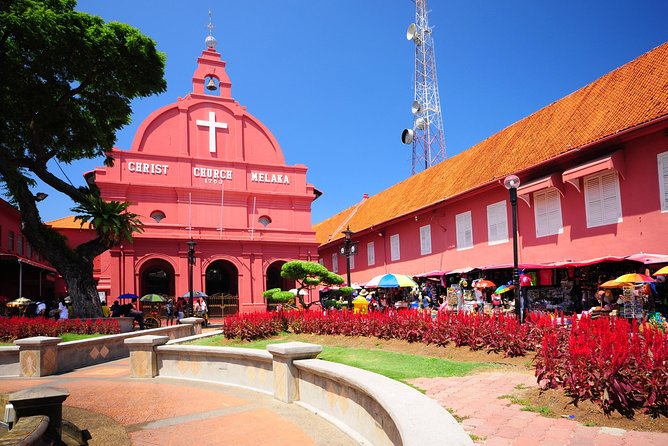
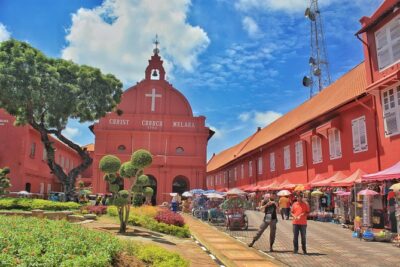
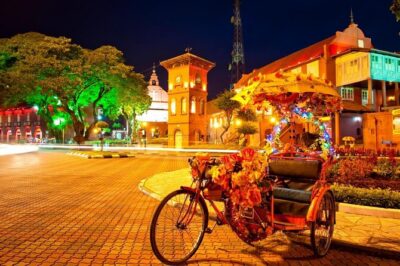
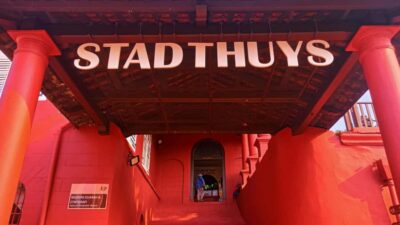
Your Malacca day typically starts at Stadthuys, right in the middle of the Red Square area. The building is famous for its red facade and the nearby red clocktower, and it carries the old Dutch spelling Stadthuys, meaning city hall.
This structure was built by the Dutch in 1650 as an office for the Dutch governor and deputy governor. So even if you do not read every plaque, the point is clear: this was the administrative center, and it anchors the story of Malacca as a European trading base.
Why it’s worth the stop:
- You get the cleanest “visual anchor” for the Dutch period in a compact area
- The architecture and surrounding square help you place the rest of the colonial-era sights
What to watch for:
- This is a quick stop, so if you want photos, aim to arrive ready with water and sunscreen
- The Red Square setting can be hot and bright, especially mid-day
A Famosa and Porta de Santiago: Portugal’s fortress, reduced to a gate
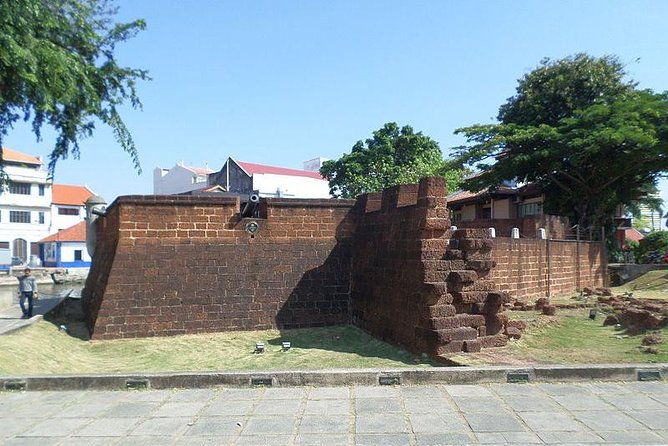
Next comes A Famosa, the former Portuguese fortress. It is one of the oldest surviving European architectural remains in Southeast Asia and the Far East, and today the famous Porta de Santiago gate house is what remains.
A Famosa is sometimes mispronounced as if it starts with the English letter A sound, so it helps to know the more authentic pronunciation is closer to Ah-moss-ah. You do not need to recite it out loud, but it is a fun detail that makes the stop feel more like a place than a checklist item.
Why you should care:
- Porta de Santiago is small, but it is powerful context for the 1500s Portuguese presence in Malacca
- It visually connects you to the earlier chapter before the Dutch and later British reshaped what people practiced and what buildings meant
Practical tip: even if the gate itself takes minutes, plan a few extra minutes to look around the surrounding area before you move on. The scale is compact, so you can easily miss the “why this matters” vibe if you treat it like a quick photo only.
St Paul’s Hill and Christ Church: how empires reshaped churches
The tour then moves into church history, and this is where the colonial layers click.
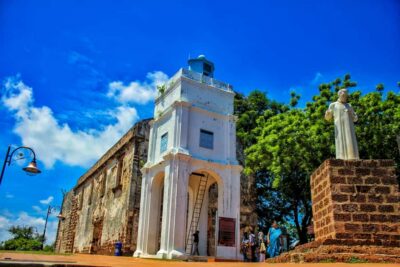
At St. Paul’s Hill, you visit St. Paul’s Church. The original structure dates back to 1521, and it is often described as the oldest church building in Malaysia and Southeast Asia. The Portuguese connection starts early, with the chapel dedicated to the Virgin Mary, known as Nossa Senhora da Annunciada, or Our Lady of the Annunciation.
A Portuguese nobleman, Duarte Coelho, is linked to the story of building the chapel after escaping a storm in the South China Sea. Whether you focus on the religious details or the survival story, the location on the hill gives you a strong sense of how Malacca’s early Europeans placed their landmarks.
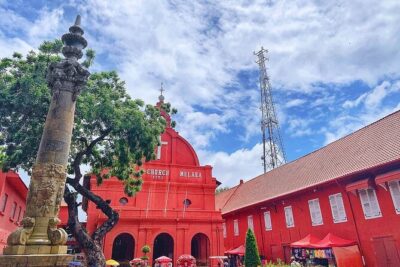
Then you visit Christ Church, an 18th-century Anglican church. It is known for being the oldest functioning Protestant church in Malaysia. The key storyline here is the shift of power: when the Dutch took Malacca from the Portuguese in 1641, Roman Catholicism was proscribed, and churches were converted for Dutch Reformed use. St. Paul’s Church was renamed Bovenkerk, or Upper Church, and used as the main parish church for the Dutch community. Later, in 1741, Christ Church was connected to the centenary of the capture of Malacca from the Portuguese.
What to expect on the ground:
- You will likely walk a bit on and around the hill area
- You get a clear timeline without needing a lecture, because each church reflects the rules of whoever held power
One possible drawback: if you are sensitive to heat or stairs, this is the part of the day where you may feel it more. Go slow, keep water handy, and take short breaks when you can.
Other city loops on our list


Jonker Street and the Peranakan pulse: shopping with historical weight
After the churches, the day shifts into street life at Jonker Street. This is Melaka’s Chinatown street, along Jonker Street, or Jalan Hang Jebat.
What makes Jonker Street more interesting than “just shopping” is the layered neighborhood story. During Dutch Malacca, servants and subordinates of Dutch colonialists lived nearby. As Dutch control faded, it became a street associated with noblemen, and Peranakan families developed strong cultural roots here. You’ll see historic houses along both sides of the road, with the street known for antiques, textiles, food, handicrafts, and souvenirs.
How to use your time here:
- If you want photos, aim for earlier in the day, when the light is softer
- If you want snacks, treat the street like a food crawl, not a single stop
The downside is also simple: Jonker Street is popular, so it can feel crowded and touristy depending on the day. If you love history but hate shopping crowds, focus on walking the street and popping into a few craft shops instead of trying to see everything.
Mini Malaysia and ASEAN Cultural Park: the quick overview stop
Midday, you reach Mini Malaysia and ASEAN Cultural Park in Ayer Keroh. The park presents traditional houses from every Malaysian state and from every ASEAN country. It can be a helpful mental map if you want a fast cultural overview without doing separate trips.
Two facts that add context:
- Mini Malaysia opened in 1986
- The Mini ASEAN Cultural Park opened in 1991
Admission is not included, so you will pay that on-site if you want to go in. This matters for value. You are already paying for a long day, so you should decide if you genuinely want a theme-park format.
Who tends to enjoy this stop:
- Families and groups who want a relaxed, inside-and-outside break
- People who want an easy cultural reference point, not a deep historical site
- Travelers who need a breather from old-town walking
If you hate theme parks, shorten your expectations. Think of it as a quick snapshot, not a main event that replaces the old city.
Cheng Hoon Teng and Kampung Kling Mosque: faiths built side by side
Two of the most compelling stops come next because they show Malacca as a true trade crossroads.
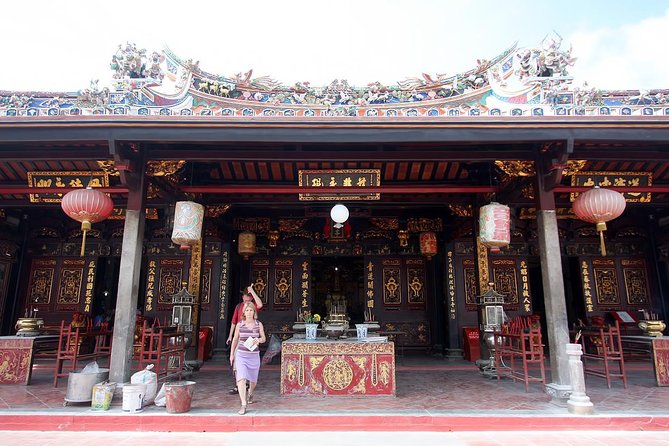
First is Cheng Hoon Teng Temple, also called the Temple of Green Cloud. It practices the Three Doctrinal Systems of Buddhism, Confucianism, and Taoism. It is known as the oldest functioning temple in Malaysia, and the founding story connects to the Dutch-era Chinese community.
The temple site was founded in the era of Dutch Malacca by Kapitan Tay Kie Ki, also listed as Tay Hong Yong, in 1645. Later, additional structures were built in 1673 under Kapitan Li Wei King, also listed as Koon Chang, with materials imported from China. The temple served as a main worship place for the local Hoklo, Hokkien-speaking community.
Then you visit Kampung Kling Mosque, a historic mosque located on Jalan Tukang Emas, also called Goldsmith Street, sometimes described as Harmony Street because of its proximity to other religious sites, including the Sri Poyatha Moorthi Temple and Cheng Hoon Teng Temple.
The mosque began as a wooden structure built in 1748 by Indian Muslim traders. In 1872, it was rebuilt in brick. Its architecture is described as a blend, with influences that cross Sumatran, Chinese, Hindu, and Malacca Malay styles.
Why this pair works on the same day:
- You see different faith spaces without a long travel shuffle
- You notice how Malacca’s trading connections created shared neighborhood geography
If you want the most out of it, pause longer than the typical quick stop. Even short visits feel meaningful when you pay attention to design details instead of only snapshots.
Malacca River revitalization and the Straits Mosque finale
Your final stretch includes the Malacca River area and ends at Malacca Straits Mosque.
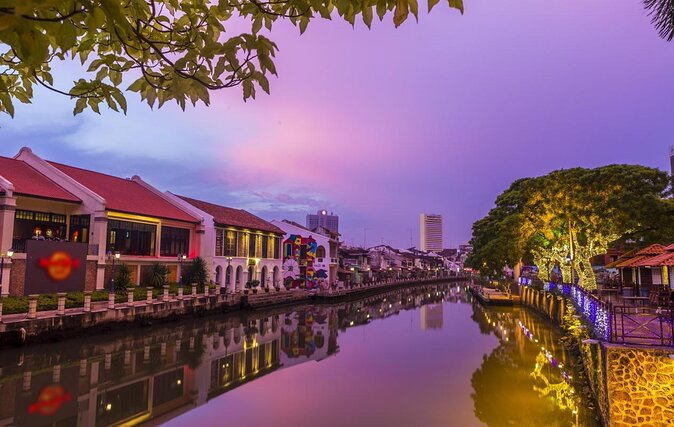
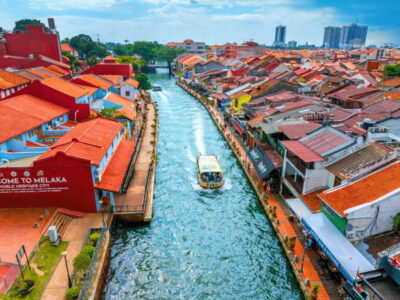
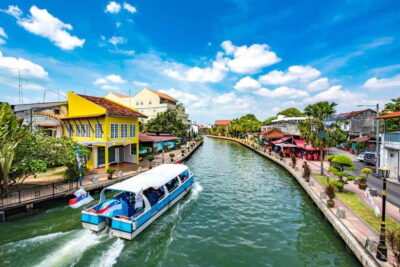
The Malacca River, or Sungai Melaka, runs through the heart of Malacca City. Historically, it was a vital trade route during the heyday of the Malacca Sultanate in the 15th century. The river starts from the neighboring state of Negeri Sembilan and feeds into the Strait of Malacca.
There has also been a large revitalization project, described as a USD $100 million (RM350 million) effort. It involved a tidal barrage, restoration of buildings and bridges, dredging, and building concrete riverbanks with river walkways. Land reclamation extended the river mouth further into the Straits. The takeaway for you is that the river is not just scenery, it is part of an active redevelopment story that shapes what visitors see today.
Then comes Malacca Straits Mosque on a man-made Malacca Island. Opened on 24 November 2006 by Malaysia’s Supreme Ruler, Tuanku Syed Sirajuddin Syed Putra Jamalullail, it is designed using a mix of Middle Eastern and Malay craftsmanship. From the shore and from certain angles, it can look like a floating structure when the water level is high.
This is a great finale because it shifts you from compact historic buildings into open views and modern architecture. It also gives you a nice “wrap up” moment for a day that started with the Red Square and followed centuries of change.
Food, heat, and how to keep the day comfortable
Malacca in full-day mode can be hot, and you’ll notice it most during the outdoor parts of the route. The itinerary is built around short 15-minute or 30-minute site breaks, so plan like you are in “quick stops plus sun” mode.
Here are smart ways to make it easier:
- Bring water and wear light clothing. You will be outside for enough time that dehydration can sneak up.
- If you want lunch, confirm whether a set lunch is truly included for your booking, since the description gives mixed signals. If it is not included, plan for lunch on your own near where the driver drops you off.
- Use your driver’s local instincts for food. Some earlier days are described as having drivers who can point you toward a good lunch spot.
Also, expect some walking and stairs around hill and church areas. This tour is not wheelchair accessible, so if mobility support is needed, choose a different format.
Who should book this Malacca day trip, and who should choose a different format
This is a good fit if you want a well-structured day covering the classics without complicated planning. It is open to all ages, and if your group includes mixed ages, the schedule’s short stops can work better than a long, slow museum day.
It is also a solid option if you care about colonial history but do not need a lecture at every location. You will see Dutch, Portuguese, and Anglican-linked sites in one loop, plus Chinese and Indian Muslim landmarks that show Malacca as a real port city, not just one empire’s story.
But set expectations about the level of guiding. This tour includes an English-speaking driver with air-conditioned vehicle and logistics support. That means you may not get a full guide-style narration at each stop. If you want deep explanations at every church and building, you may prefer a fully guided full-day Malacca tour product.
Should you book this Full-Day Malacca City Tour?
I’d book it if you want an efficient, classic Malacca introduction with hotel pickup, a comfortable ride, and a route that hits the big name landmarks plus the multicultural neighborhoods.
Skip or reconsider if you want:
- A full guided commentary at every stop rather than driver-led logistics
- A fully accessible day for wheelchair mobility
- A lunch that is guaranteed, since the description is inconsistent and you should confirm before you go
If your goal is to come away with a strong feel for how Malacca’s Dutch, Portuguese, British, and local communities shaped the city, this day trip is a sensible use of time. Just plan for heat, keep your expectations realistic about guidance level, and you’ll get a lot for your $55.
FAQ
How long is the Full-Day Malacca City Tour?
It runs about 7 to 8 hours.
What is included in the price?
You get an air-conditioned vehicle, an English-speaking driver, and hotel pickup and drop-off. A mobile ticket is provided.
Is lunch included?
The information is mixed. One part mentions an included set lunch, while another note says meals are not included. Confirm what is included at booking.
What stops will I visit during the day?
You will visit multiple Malacca City landmarks, including Stadthuys (Red Square), A Famosa, St. Paul’s Hill and Church, Jonker Street, Christ Church, Mini Malaysia and ASEAN Cultural Park, Cheng Hoon Teng Temple, Kampung Kling Mosque, Malacca River, and Malacca Straits Mosque.
Do I need to pay entry fees?
Most listed stops show free admission tickets, but Mini Malaysia and ASEAN Cultural Park has an admission ticket not included.
Is this tour private?
Yes, it is a private tour, meaning only your group participates.
Is the tour wheelchair accessible?
No, the tour is not wheelchair accessible.
What language level should I expect?
The driver is English-speaking.
What is the cancellation policy?
Free cancellation is available up to 24 hours in advance for a full refund. Less than 24 hours before the start time is not refunded.
What other practical timing should I know?
It is commonly booked around 10 days in advance, and the tour starts with pickup from your Kuala Lumpur hotel.
More Tours in Kuala Lumpur
More Tour Reviews in Kuala Lumpur
Melaka Beyond the River
Other Kuala Lumpur write-ups from our reviewers
- Sky Mirror Experience at Kuala Selangor from Kuala Lumpur
★ 4.5 · 3 reviews - Putrajaya Tour From Kuala Lumpur
★ 4.0 · 3 reviews - Private Batu Caves & Petronas Twin Tower Tickets With Lunch *26*
★ 5.0 · 3 reviews - Private Night Tour: Petronas Twin Tower And Shopping
★ 5.0 · 3 reviews - Marina Jetty Pangkor Laut or Lumut Jetty Transfer from Kuala Lumpur
★ 5.0 · 3 reviews
More Malacca Heritage Day Trips.
 ★ 4.4Historical Melaka Day Tour with LunchFrom $422,297 reviews
 ★ 5.0Historical Malacca Guided Day Tour (Shared Tour)From $322,172 reviews
 ★ 5.0Historical Malacca Day Tour from Kuala Lumpur (Private Tour)From $87515 reviews
 ★ 4.6Malacca Day Trip with River Cruise and LunchFrom $78312 reviews
 ★ 4.5Malacca Historical Private Tour With Personal ChauffeurFrom $95151 reviews
 ★ 3.5Melaka River Cruise E-TicketFrom $9129 reviews
 ★ 4.0Malacca Sunset Tour: UNESCO Heritage Highlights & River CruiseFrom $102108 reviews
 ★ 4.5Private Full Day Tour to MalaccaFrom $8894 reviews
Other Malaysia lists with this tour