
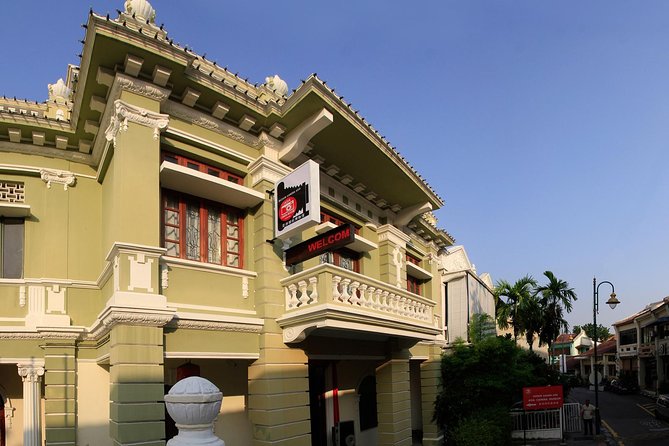
REVIEW · PENANG & GEORGE TOWN TOURS
Asia Camera Museum Admission Ticket
Touch antique cameras, learn how images were made. In George Town, the Asia Camera Museum mixes a guided route with real photo-world props, including a Magic Lantern projector with hand-painted glass slides. I especially liked seeing the museum’s story of early photography and having chances to try vintage cameras and take photos during the visit. A big plus for me was meeting the staff member May, who gives the tour energy and practical context as you move through the rooms.
The experience is also pleasantly short, about 30 minutes to 1 hour, so you should plan your day around that time window. One thing to watch: you’ll need to print your confirmation voucher and redeem it at the ticketing counters, so last-minute phone-only plans can get annoying in a hot afternoon.
In This Review
- Key Highlights Worth Marking on Your Map
- Why Asia Camera Museum Feels More Like a Workshop Than a Lecture
- Price and Timing: The Value Math That Actually Matters
- The First Room: Magic Lantern and Silent Film Screens
- Dark Room Time: How Film Developing Was Supposed to Work
- Camera Repair Workshop: Seeing Mechanical Cameras Get Restored
- Hands-On Cameras and Getting Photos You Can Share
- What a Typical Visit Feels Like (And How to Plan Your Hour)
- Who Should Go, and Who Might Skip
- Should You Book Asia Camera Museum Admission?
- FAQ
- How much is the Asia Camera Museum admission ticket?
- How long does the museum visit take?
- What are the opening hours?
- What’s included with the ticket?
- Do I need to print my confirmation voucher?
- Is hotel pickup or drop-off included?
- Is food or drinks included?
- What is the maximum group size?
- Is this experience suitable for most people?
- Can I cancel and get a refund?
Key Highlights Worth Marking on Your Map
- Magic Lantern projector from the early 1900s, paired with a hand-painted glass color slide
- Silent movie projector lit with an oil lamp and gear-driven setup
- Dark room concept, tied to how film developing worked since the early 19th century
- Camera repair workshop with tools used in the 1960s to restore mechanical cameras
- Hands-on photo chances, including using older camera devices for fun shots with your phone
- Small group format with a maximum of 15 people, so you get real attention
George Town keeps giving. More of Penang here
- Half-Day Penang Countryside Cycling Tour★ 4.5 · 454 reviews
- Penang: Flexible 6-Hours Highlights★ 5.0 · 378 reviews
- Penang: Flexible Full-Day Adventures★ 5.0 · 105 reviews
- Penang: Flexible Half-Day Escapes★ 5.0 · 65 reviews
Why Asia Camera Museum Feels More Like a Workshop Than a Lecture
Asia Camera Museum in George Town is aimed at people who love cameras, but it works even if you only like taking photos sometimes. The museum doesn’t just point at objects behind glass. It builds a route where you can see how old tech worked, then try a few things yourself.
What makes it click is the mix of eras. You start with early projection and photography tools, then you move toward the “how it was made” part, like dark-room developing and mechanical repairs. For me, that hands-on angle is the whole point, and it’s also what keeps the visit from feeling like a slow inventory list.
You’ll also feel the staff’s care in the details. May is a standout name because she’s mentioned for her passion and the way she involves people, not just talks at them. If you like questions and small explanations while you look around, this kind of tour style suits you.
Price and Timing: The Value Math That Actually Matters
Admission is $6.52 per person, and you’re typically there for about 30 minutes to 1 hour. That short time window is a quiet superpower in Penang, because you can fit the museum between sightseeing blocks without burning half a day.
For value, the price works because multiple “worlds” are included. You get historic displays, a dark room segment tied to film developing, a camera repair workspace with tools, and hands-on chances with vintage cameras. When a low-cost ticket wraps in several different types of experiences, you usually end up happier with what you got than if you paid for a single display.
Timing is simple: the museum is open daily from 10:00 AM to 6:00 PM. Since it runs year-round across the listed dates, you’re not stuck playing calendar games. The museum is also near public transportation, so it’s easier to drop into than places that require a long detour.
One practical note: it’s booked about 11 days in advance on average. I’d treat this as a sign to reserve ahead if you’re traveling during a busy stretch, especially because the group size cap is 15. Small groups are great, but they also mean you can’t count on walk-in space the way you would at a giant museum.
The First Room: Magic Lantern and Silent Film Screens
The opening stretch is pure “how did people watch images back then?” energy. One of the signature highlights is a Magic Lantern projector from the early 1900s, paired with a large-format hand-painted glass color slide. That combination matters, because it shows you the real link between art on glass and light that turns it into a moving image experience.
Right nearby, you also have a 35mm silent movie projector that’s illuminated using an oil lamp and gears. Even if you don’t know the terms, you can feel the mechanics. You see how the system produces light and how physical parts create motion, not just pixels.
This part is also a good “starter” for people who are less camera-geek. It gives you a story hook before the museum goes deeper into camera design. If you’re the type who likes to understand context first, this is a smart entry point.
A small consideration: these setups are easier to appreciate if you let the guide’s explanations land and take a few minutes to look closely. If you rush straight through to the hands-on areas, you might miss the fun of connecting early projection to early photography.
Dark Room Time: How Film Developing Was Supposed to Work
After the projection section, you get to the part that most modern-day visitors forget exists: film developing was once an entire process, not a one-button phone action.
The museum has a dark room experience, described as a space created and used since photography’s early era in the early 19th century. That doesn’t mean you’ll do chemistry in a lab. It means you learn the why and how behind the process, and you see the setup that photographers relied on to develop images.
What I like about this segment is that it turns “old photos” into something you can understand. Instead of seeing vintage pictures as artifacts, you start thinking about exposure, negatives, and the step-by-step workflow. Even if you never plan to develop film yourself, you’ll walk out with a clearer mental model.
For photographers, it’s also a nice reminder that cameras are only one half of the image-making equation. The other half is processing. If you’re the type who enjoys technique, you’ll probably enjoy this part a lot.
Straight entry tickets we have also checked


Camera Repair Workshop: Seeing Mechanical Cameras Get Restored
One of the most practical, hands-on parts is the camera repair work place. The museum describes it as a space connected to repairers and the tools they used in the 1960s to repair and restore mechanical cameras.
This is where the museum becomes more than nostalgia. Mechanical cameras are full of gears, springs, and tiny tolerances. So when you see repair tools in action, or get close enough to understand how parts work, it changes how you think about vintage equipment.
It also helps that the museum encourages you to interact in this area. That’s not just for fun, it’s for comprehension. If you’ve ever wondered why old cameras can be finicky, or why repairs matter, this workshop setup explains the stakes without getting too technical.
If you’re not into maintenance, you can still enjoy it. You’ll just interpret it as “how the world used to keep cameras running,” not as a DIY project. Either way, it adds real variety to the visit.
Hands-On Cameras and Getting Photos You Can Share
The museum doesn’t lock everything away. You’re encouraged to do hands-on activities and try taking photographs with some of the museum’s cameras.
In the reviews that guided my expectations, people specifically mentioned being able to look through older cameras and take phone photos with functional vintage equipment. That sounds like the kind of detail that makes a small museum feel personal, because you’re not just consuming the collection. You’re creating something with it.
You’ll likely come away with a few shots that have that retro vibe because the camera is part of the look, not just part of the story. If you’re traveling with a phone-first camera habit, this is a great way to break out of the usual routine without needing to learn a new system.
A practical tip: give yourself a few minutes to slow down during the hands-on time. If you rush, you’ll miss the “try, see, adjust” rhythm that makes using old devices satisfying.
What a Typical Visit Feels Like (And How to Plan Your Hour)
This is a small-group experience with a maximum of 15 travelers. That size matters. It keeps the tour from feeling like a crowded conveyor belt and helps staff manage questions while people circulate through the rooms.
The visit flow is basically one continuous stop, built around several rooms. You’ll move from projection highlights into dark-room learning, then into the repair workspace, and finally into hands-on camera time. So it’s not a long “multi-ticket day.” It’s more like a focused walkthrough with several mini-experiments.
Because you’re there for about 30 minutes to 1 hour, plan to arrive with enough energy for curiosity. This museum also works well as a break on a hot day, since you can keep your walking time short and your time indoors.
If you’re pairing it with other George Town sights, build in a buffer. You’ll want a bit of slack so you don’t feel rushed while you take photos and read the displays.
Who Should Go, and Who Might Skip
This museum fits best if you enjoy any of these:
- vintage photography and camera design
- early image projection like the Magic Lantern era
- practical “how it works” explanations
- hands-on museum moments where you do more than look
If you’re hoping for a huge modern-tech showroom, this may not be your style. The value here is in historical tools and photo-making processes, not in the newest digital gear.
Also, because the visit is short and the ticket is admission-focused, people who like long, self-paced museums might want to treat it as a one-hour stop, then add time elsewhere for extra exploring.
Should You Book Asia Camera Museum Admission?
If your day in George Town has room for an hour, I think booking is a good idea. The ticket price is low, the experience covers several different photo-related “worlds” (projection, dark room concepts, repair work place, hands-on camera time), and the small group size helps you feel seen.
I would especially book if you like the idea of taking a few photos using older equipment, or if you want your camera knowledge to include what happens after you press the shutter. If you’re less interested in how images were created and more interested in modern photography gear, consider whether you’ll enjoy the workshop-style historical focus.
One last practical check: plan to have your printed voucher ready for the ticket counter. That single step prevents most annoying travel moments for this kind of small museum setup.
FAQ
How much is the Asia Camera Museum admission ticket?
The price is listed as $6.52 per person.
How long does the museum visit take?
The duration is approximately 30 minutes to 1 hour.
What are the opening hours?
The museum is open Monday through Sunday from 10:00 AM to 6:00 PM.
What’s included with the ticket?
Your ticket includes admission to the Asia Camera Museum.
Do I need to print my confirmation voucher?
Yes. You are required to print your confirmation voucher to redeem your actual admission ticket(s) at the ticketing counters.
Is hotel pickup or drop-off included?
No. Hotel pick-up and/or drop-off is not included.
Is food or drinks included?
No. Food and drinks are not included.
What is the maximum group size?
The experience has a maximum of 15 travelers.
Is this experience suitable for most people?
The information says most travelers can participate.
Can I cancel and get a refund?
No. The experience is non-refundable and cannot be changed for any reason.
Tickets We Also Bought
More Tour Reviews in George Town
More of Penang Island
Other George Town write-ups from our reviewers
- Penang Half Day City Tour Including Tropical Spice Garden
★ 4.5 · 3 reviews - Penang Hill and the Kek Lok Si Temple
★ 5.0 · 4 reviews - Specialist Penang Tour With Boy 8 hour
★ 5.0 · 5 reviews - Penang City & temple Tour with Penang Hill Train Fast Lane Ticket
★ 4.5 · 6 reviews - Penang Exciting Local Full Day Private Tour 8 Hours
★ 4.5 · 6 reviews
More Penang & George Town Tours.
 ★ 4.9Penang Plates Food Tour with 15+ TastingsFrom $49734 reviews
 ★ 4.5Half-Day Penang Countryside Cycling TourFrom $32454 reviews
 ★ 5.0Flexible 6-Hours HighlightsFrom $80378 reviews
 ★ 4.7George Town, Penang: Malay Countryside CyclingFrom $33287 reviews
 ★ 4.9Kek Lok Si Temple and Penang Hill Guided TourFrom $78199 reviews
 ★ 5.0Good Morning Penang Food Tour with 15+ TastingsFrom $49148 reviews
 ★ 4.6Penang Island Full-Day Private TourFrom $173134 reviews
 ★ 4.5The Habitat Penang Hill Entry TicketFrom $14111 reviews
Other Malaysia lists with this tour